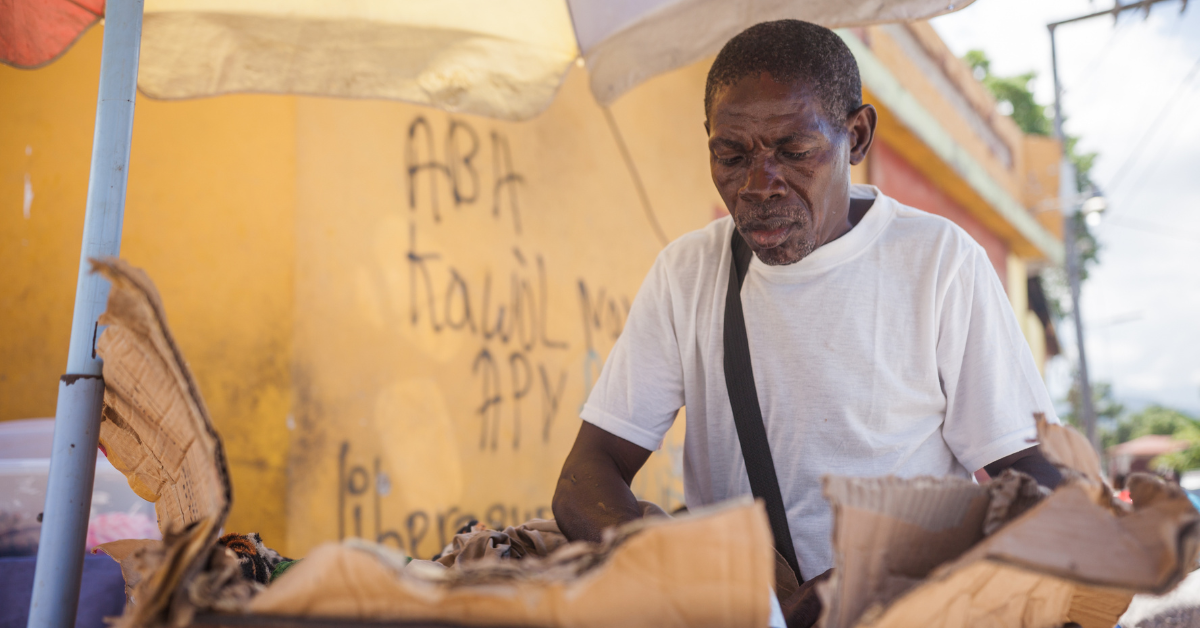
A Haitian father rebuilds his life after Hurricane Melissa
When Hurricane Melissa hit Haiti in October 2025, it took almost everything from Marc Azar. His garden, his chickens, household belongings and his business. “Things were very bad for me, truly terrible,” he said. “Everything I owned was washed away, and I was left empty-handed.”
This wasn’t the first time Marc had to start over. He used to live in Haiti’s capital, Port-au-Prince, but ongoing gang violence forced him to seek safety outside the city. “I lost everything there. Gangs took everything, and I escaped with only the clothes on my back,” he said.
Along with his wife and eight children, Marc resettled in Petit-Goâve, a small town west of the capital, and he started over with a business selling cold drinks. But then the hurricane came. “The storm came and I lost everything again,” he said. “I had nothing left.”
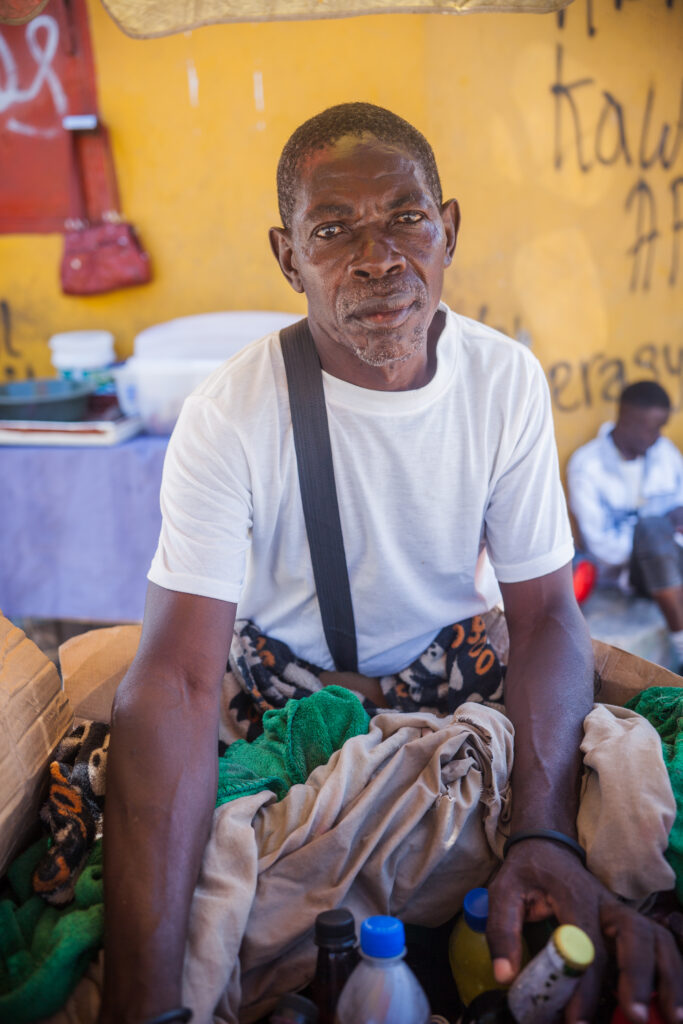
But support from a CLWR emergency response, implemented by the Lutheran World Federation (LWF), helped Marc and his family start over again.
His family received buckets, soap, bleach, toilet paper, toothbrushes and water purification tablets from LWF’s local partner, RODEP. They used the supplies to disinfect things that had become contaminated by the hurricane, and the other supplies helped the family maintain basic hygiene when they had lost their belongings. “After the support from RODEP, I found some relief because after the storm there was nothing left, no hope at all,” Marc said.
Those hygiene supplies, as well as community training on hygiene and sanitation, provide an essential role in preventing the spread of disease, a major issue after disasters such as hurricanes, says Emmanuel Noel, the general coordinator of RODEP. “Populations affected by disasters face a high risk of epidemics,” he said. “Fortunately there were not many epidemic outbreaks because preventive measures were taken.”
Marc also received cash support that he could use to cover whatever needs he felt were most important. “With that cash, I was able to solve some urgent problems,” he said. “I had two small children who could not go to school, and I was able to send them to school. I also restarted my business and got back on the streets to work.”
While he still has to rent the wheelbarrow he uses for his business, being able to work again means he’s able to provide for his family. “That cash assistance put me back on my feet,” he said.
Marc is grateful for the support, and the organizations and donors that made it possible. “I say thank you. I do not even know what words to use to express my gratitude to these organizations that came to help me during that time.”
The support Marc received was part of a five-month CLWR emergency response to Hurricane Melissa that provided 480 families affected by the storm with financial support and hygiene supplies. The project also rehabilitated five community water systems, serving 11,350 people, and provided prevention against gender-based violence and support for survivors. The project was implemented by LWF Haiti and its local partners, such as RODEP, and was supported with funding from the Government of Canada through the Humanitarian Coalition.
Top image caption: Marc Azar stands outside his home in Nan Bannann, Petit-Goâve, Haiti. After fleeing gang violence in Port-au-Prince and later losing his business during Hurricane Melissa, Marc received hygiene supplies and cash assistance through a CLWR-funded project implemented by RODEP, helping him restart his business selling cold drinks. (CLWR Photo/Fairpicture/Reginald Louissaint Junior)