A world away from COP31, here’s how Lake Chad farmers are fighting for food security
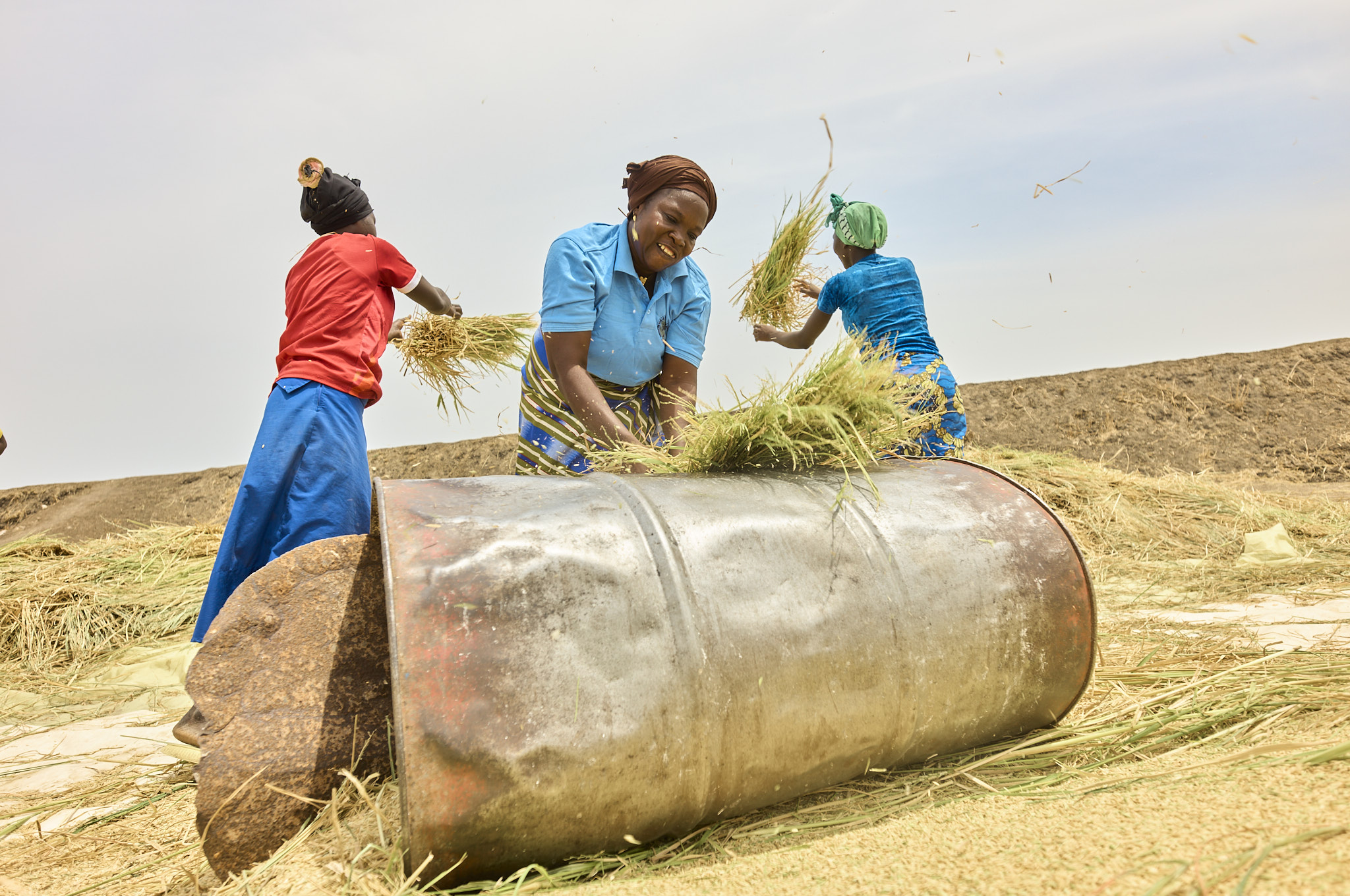
Rice fields stretch across the landscape of Toukra, in Chad’s Lake Chad Basin, where dozens of farmers, mostly women, are busy tending their crops.
For Danigué Isabelle Boïdo, a farmer, the sight is a reminder of how much has changed.
“We truly experienced hunger,” she recalls. “We didn’t even know rice could be grown here.”
Six years ago, Danigué and other farmers began experimenting with rice cultivation, learning how to grow the crop and secure suitable land. Training and practical guidance later helped them improve their methods and turn rice farming into a more reliable source of food and income.
But progress has been fragile. In 2024, flooding destroyed Isabelle’s entire rice harvest.
Across the Lake Chad Basin, which extends through parts of Chad, Cameroon, Niger and Nigeria, increasingly erratic rainfall, rising temperatures and deteriorating soil are threatening farming livelihoods.
In Cameroon’s Far North region, a farming collective saw their harvests cut in half, from 50 sacks of chilies to fewer than 25. In 2023, their entire tomato crop failed.
With little to sell and less money for food, some families survived on the same meal for months.
While world leaders prepare to debate climate solutions at COP31, farmers around Lake Chad cannot afford to wait.
Learning to farm in a changing climate
In Mandalia, Chad, Yamadji Nanadoum Nuba grows tomatoes, onions and other vegetables to support his family of 10.
Years of cultivation had depleted his soil. Commercial fertilizers were increasingly expensive, and drought made growing healthy crops more difficult.
At a Farmer Field School supported by the Nature-Based Solutions project, implemented in Chad and Cameroon through a partnership between Canadian Lutheran World Relief (CLWR) and the Lutheran World Federation (LWF), Nuba learned to make compost from locally available animal manure, straw and ash. Combined with improved irrigation practices, the compost helped restore soil fertility and retain moisture.
His wife, Simone, now sells around 10 bags of vegetables weekly at the Mandalia market, earning approximately C$11 per bag before expenses. Customers praise their tomatoes for their size, sweetness and longer shelf life.
“When you learn to make compost and keep the water in the ground, it changes everything,” Nuba says. “The soil becomes alive again.”
Across the border in Bougourma, Cameroon, Kakami Ali faces another challenge: water scarcity.
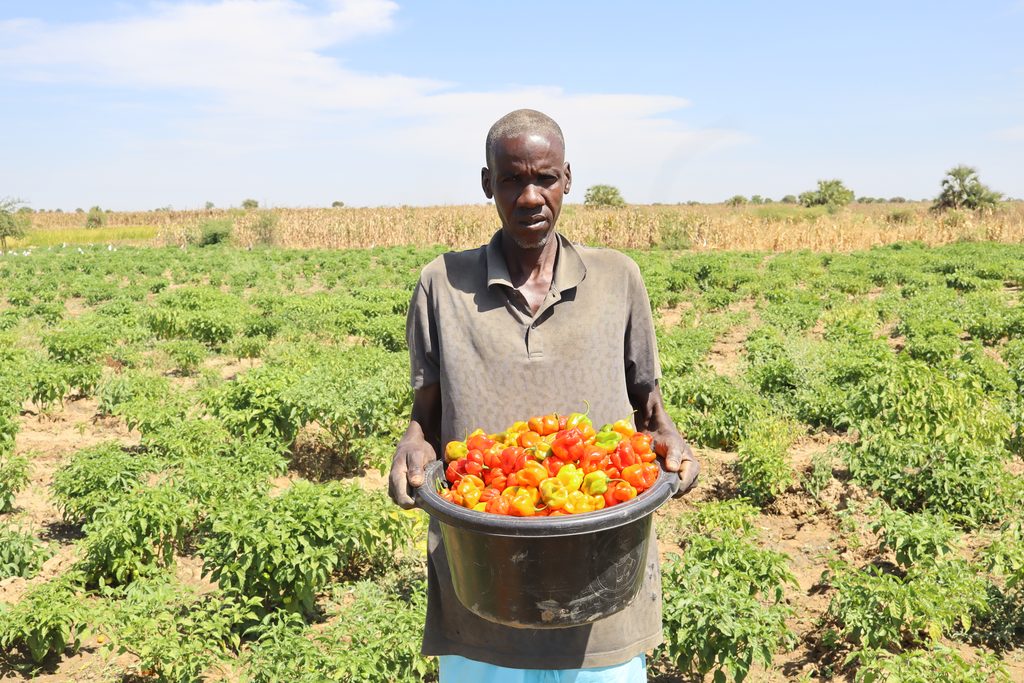
With the river far from his fields, Ali relies on his brother’s borehole for irrigation. He has also received improved seeds, farming tools and training in composting, crop rotation and natural pest control from LWF.
Among the techniques he learned is Zaï, a traditional farming method that uses small planting pits to capture rainwater and concentrate nutrients around crops.
In less than two months, his successive chilli harvests yielded three, six and then 10 sacks—a total of 19. Each sack sold for approximately C$35 at the time, with more harvests expected.
Despite those gains, continued access to irrigation remains essential to his livelihood.
For women, the challenge goes beyond farming
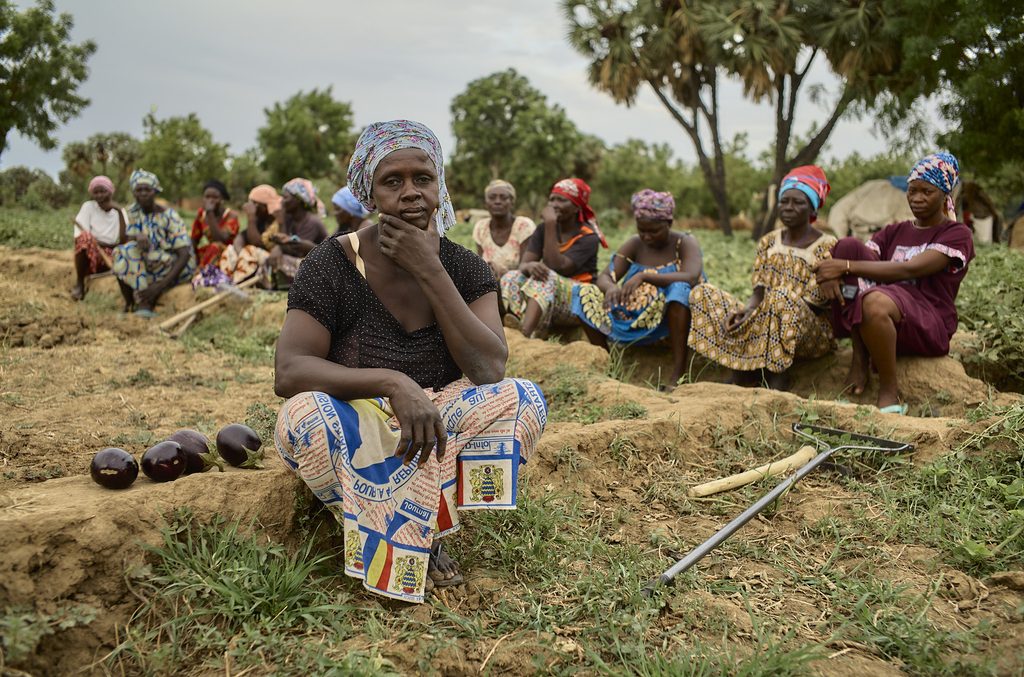
For Danigué learning to cultivate rice was only part of the answer. She also needed land, seeds and money to pay for labour.
She found financial support through a Village Savings and Loan Association (VSLA) in her community, where she now serves as treasurer. Working in partnership, CLWR and LWF have helped communities establish VSLAs through training and guidance.
Members pool their savings and can borrow from the fund to invest in farming, start businesses or meet urgent household needs.
Danigué used a loan from her group to secure farmland, purchase rice seeds and pay for labour.
“This fund allowed me to obtain land and develop my activities,” she says.
Elsewhere, in Mandalia and Kousseri, women’s groups have secured farmland collectively through their respective VSLAs, gaining access to land that would otherwise have been difficult to obtain.
Beyond individual farms
Danigué, Nuba and Ali face different challenges, but their stories share a common thread: each is finding a locally driven way to tackle food insecurity and adapt to a changing climate, with guidance and support from Canadian Lutheran World Relief (CLWR) and the Lutheran World Federation (LWF).
Their experiences are part of the broader Gender Transformative Climate Adaptation initiative in Chad and Cameroon GTCA), a C$17.2 million project funded with support from the Government of Canada.
The initiative combines support for local leadership, improved farming practices, community-led research and learning to strengthen climate adaptation and build more resilient livelihoods. Women’s empowerment and social cohesion are central to its approach.
Between 2023 and 2026, more than 78,760 people participated in various programs supported by the initiative or benefited from its assistance, and another 393, 800 indirectly, for a total of 472, 560. Women and children accounted for the majority.
For Danigué, whose rice-farming journey began years before the project, that support includes participation in a project-supported VSLA, which helps women save collectively and access financial resources.
Heather Platt, CLWR’s Director of Development Programs, says the results demonstrate the importance of investing in local knowledge and leadership.
“What we’ve seen through the GTCA project is that communities already have the knowledge and ingenuity to adapt. Our role is to provide the support and resources they need to build on that knowledge, strengthen local leadership and continue developing farming solutions that work for their communities.” She says.
What Lake Chad can tell COP31
As world leaders prepare to gather in Antalya for COP31, the experiences of farmers around Lake Chad bring into focus some of the challenges they will be discussing, from food security and water scarcity to financing for climate adaptation.
For Danigué, Nuba and Ali, these are not abstract policy questions. Their experiences show what farmers can accomplish with practical support, but also how vulnerable that progress remains to unpredictable weather and limited resources.
Although Lake Chad may never feature prominently in the conference discussions, the experiences of its farmers offer a valuable perspective on a much wider challenge: the difference between knowing how to adapt to climate change and having the resources to do so.
Platt says sustaining these locally driven gains requires longer-term commitment from governments and international funders.
“The reality is that communities around Lake Chad already know how to adapt, but they will keep facing new climate shocks. What they need is sustained, flexible investment that keeps them in the driving seat—so they can build on the progress they’ve made, respond to changing conditions and be better prepared for whatever comes next.”
For Danigué the significance of those decisions lies in the future she hopes to build for her children.
As a child, she followed her parents into the fields, developing a love for farming despite the hardships her family faced. Today, after years of struggling to feed her family, she has land to cultivate and hopes her children will have opportunities she once could scarcely imagine.
“I would have never imagined that I could acquire a plot of land and build a house,” she says.
Thousands of kilometres from the discussions in Türkiye, she is thinking about what she can leave to the next generation.
“Today it is my turn to pass this legacy on to my children.”