After the floods, Nepal’s survivors race to rebuild before winter
The sound of children learning has returned to Shree Ganesh Basic School in Siruchet, a mountain village in northern Nepal, where classrooms had become temporary shelters for families displaced by recent devastating floods.
For Som Tamang, the school’s reopening is deeply personal. His father, who served on its management committee, died in the disaster. His sister, the school’s treasurer, remains missing, while the head teacher was also swept away.
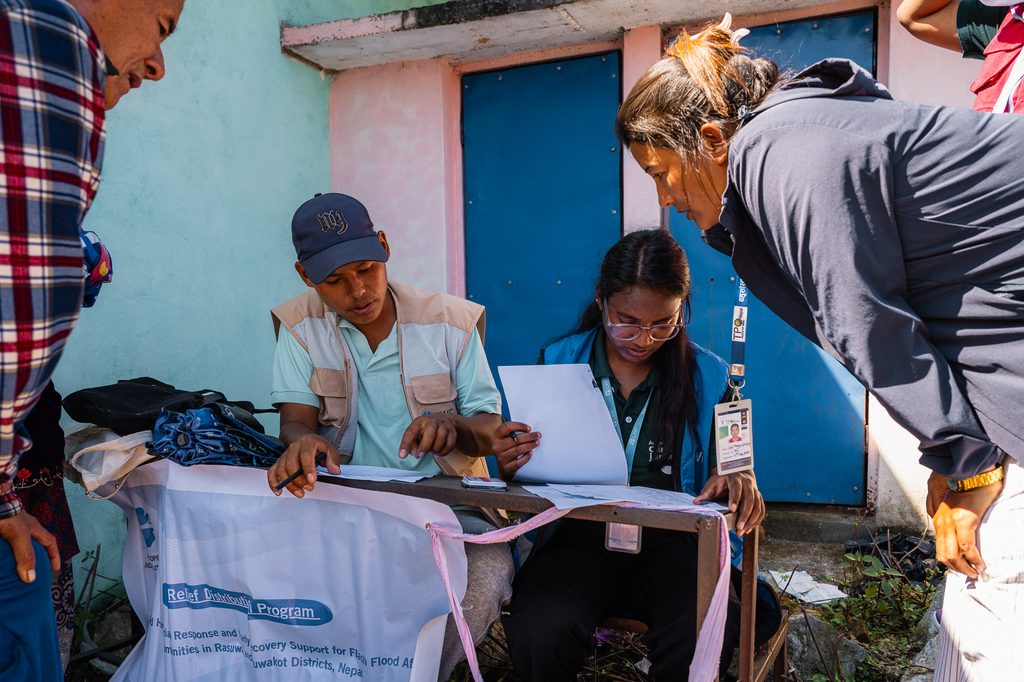
Despite his grief, Som Tamang has been working with humanitarian organizations to coordinate the distribution of food and essential supplies.
“I have lost my father and my sister, and I am one of the few young people left in the community,” he says. “I will do my best to support our people and help bring our community towards recovery.”
Reopening the school was one way he hoped to honour their memory. It is now welcoming back its own students, along with children from neighbouring schools damaged by the floods, although shortages of stationery, whiteboards and computers remain a challenge.
Losing everything, for the second time
On August 26, a torrent of water, mud, ice and debris rushed down from the mountains near Nepal’s border with Tibet, devastating communities along the Bhote Koshi and Trishuli rivers.
Homes, schools, bridges, roads, farmland and businesses were destroyed, upending daily life across the region. In Rasuwa district alone, more than 32,000 people were affected.
For 59-year-old Kanchi Maya Tamang, the floods destroyed more than her home. They wiped away a decade of hard work rebuilding her life after Nepal’s 2015 earthquake.
She had lost her house in that disaster, but she and her family managed to rebuild it, eventually constructing a three-story home in Mailung.
Then came the August floods.
The flood swept away their house, farmland, grocery shop and approximately 300 goats.
Kanchi Maya Tamang and her husband survived because they were away attending a relative’s prayer gathering.
“Our luck saved us. Otherwise, we wouldn’t be alive today,” she recalls.
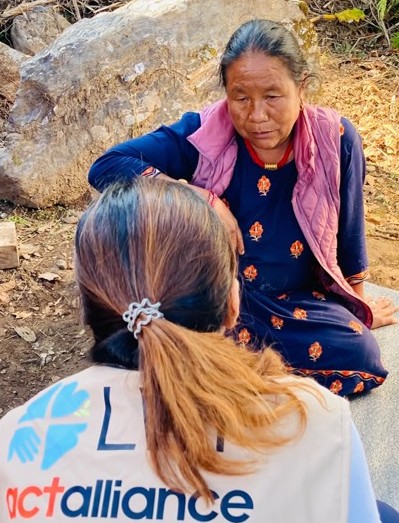
Kanchi Maya Tamang and her husband now live in a temporary shelter in Siruchet. She tried to earn money repairing roads, but after eight days, the work became too physically demanding.
She says emergency assistance funded by Canadian Lutheran World Relief (CLWR) and delivered through its implementing partner, Lutheran World Federation (LWF) Nepal, has helped her family meet its immediate needs.
Kanchi Maya Tamang speaks with an LWF Nepal aid worker in Siruchet ((CLWR photo/Edoardo Santangelo)
Slowly finding a way back
More than two months after the disaster, some families have returned home. Others, whose houses were destroyed, remain in temporary shelters and holding centres.
According to field reports from humanitarian responders, an estimated 50 to 60 per cent of essential services have resumed in some affected areas, although many are still operating at minimal capacity.
Some roads have reopened, but damaged bridges continue to isolate communities, turning journeys that once took four hours into trips of nearly eight.
For families, that means longer trips to markets and health facilities. For humanitarian organizations, it means higher costs to transport food, household supplies and building materials from Kathmandu.
The government is identifying safer locations for displaced communities and has proposed transitional shelters designed to withstand future disasters.
But for many families, including Kanchi Maya Tamang and her husband, the wait for a permanent home continues, with little certainty they will have one before winter sets in.
Help that makes everyday life easier
In the days following the floods support from Canadians helped LWF Nepal deliver food and other essential supplies to families who had lost almost everything.
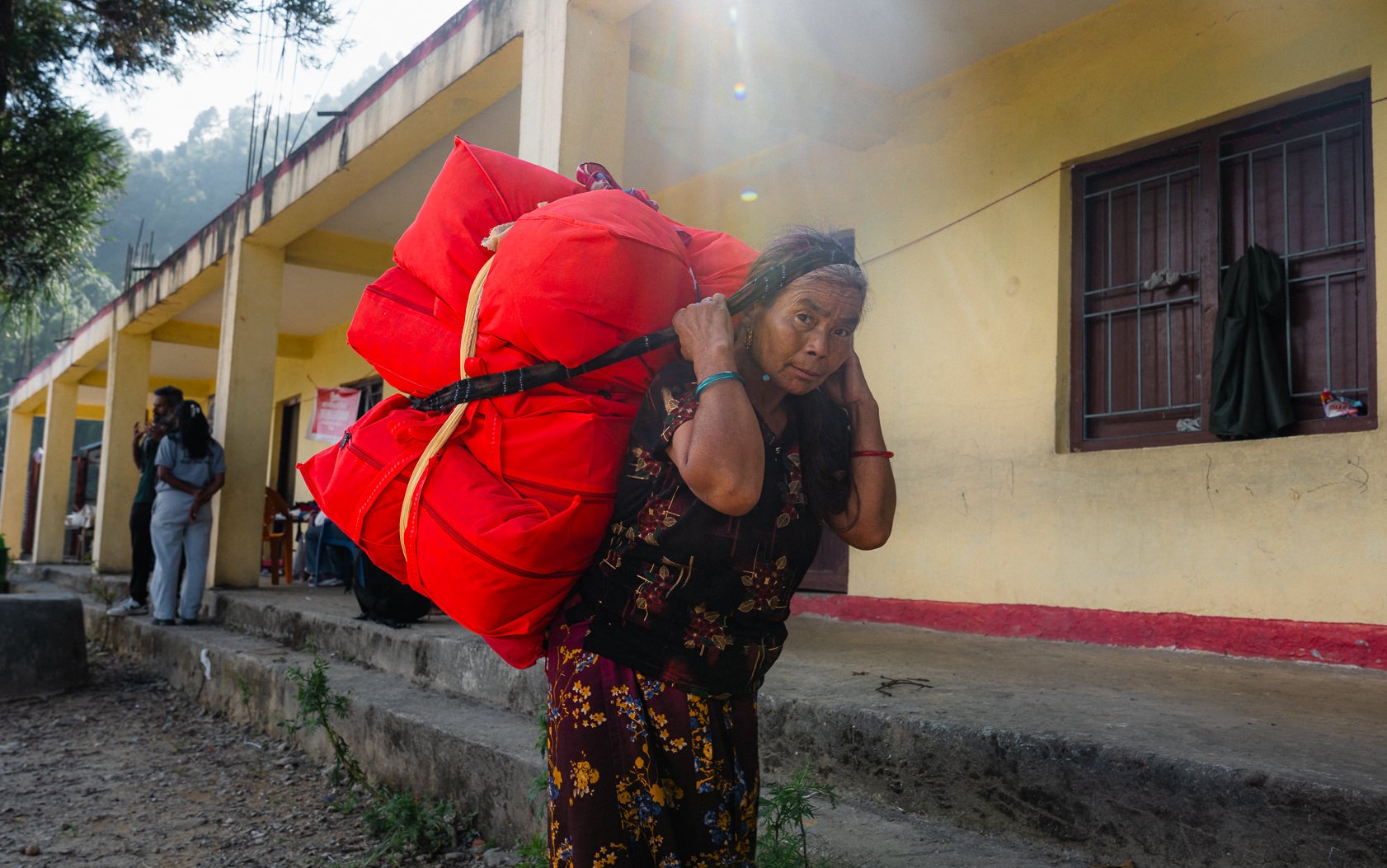
By October 19, LWF distributed 736 food packages, 434 kitchen utensil sets, 390 dignity kits, 675 family solar sets and temporary shelter materials, alongside winter clothing to help families prepare for the colder months.
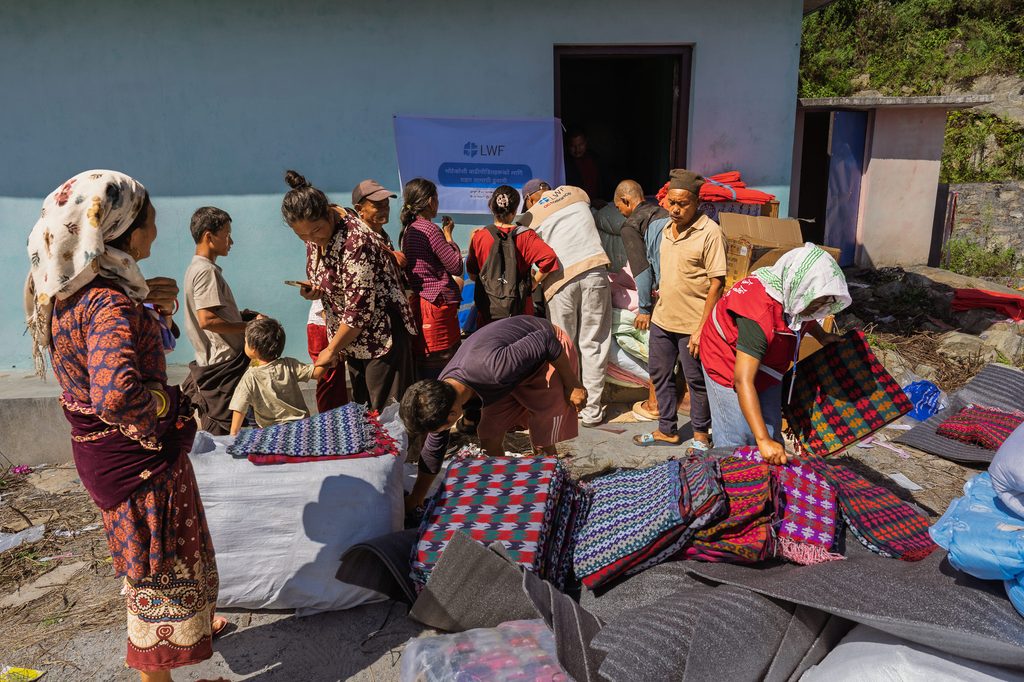
In Siruchet, Som Tamang helped coordinate assistance for 105 households.
“With this support, we now have enough food and essential hygiene items to help us manage for the next month without worrying,” he says.
Kanchi Maya Tamang says her family has received enough emergency supplies to meet their immediate needs. But with winter approaching, she worries about staying warm in temporary accommodation.
At Shree Ganesh Basic School, relief efforts helped restore electricity, while local organization Share and Care built a temporary structure nearby.
Som Tamang says the school urgently needs whiteboards, stationery, printers and laptops to accommodate additional students and support its continued operation.
Winter brings another worry
For families still living in temporary shelters, winter is bringing another worry: how to stay warm when they have no permanent home.

For Tyler Braun, Director of Humanitarian Programs at CLWR, the greatest concern is how displaced families will cope with the cold, particularly children, older people and those with health conditions or disabilities.
“Exposure to cold, inadequate shelter, and limited access to warm clothing, bedding and essential services could further increase their vulnerability,” Braun says.
“Continued support is vital to address urgent winterization needs and help families face the coming months safely and with dignity.”
Winter is also delaying longer-term recovery. Families who have lost their homes must first secure safe shelter before they can focus on restoring farmland, replacing livestock or reopening businesses.
The long road to recovery
Food and emergency supplies have helped families through the first difficult weeks. Now they face a bigger challenge: finding permanent homes and ways to support themselves again.
CLWR plans to help approximately 4,000 flood-affected households rebuild their lives by securing shelter, restoring livelihoods, accessing water and sanitation, supporting children’s education and preparing for future disasters.
LWF Nepal is continuing to assess families’ longer-term needs while helping communities prepare for winter.
“Continued support will enable families to restore their livelihoods, regain self-reliance, and rebuild their lives with dignity,” Braun says.
Back in Siruchet, children are learning again at Shree Ganesh Basic School, even as shortages of essential materials continue.
For Som Tamang, reopening the school is a way to honour his father, who died in the floods, and his sister, who remains missing.
It is one step towards recovery. For families still without homes and livelihoods, much more remains to be rebuilt before winter arrives.
Top image caption: Suku Maya Tamang carries relief supplies provided by LWF Nepal with support from CLWR following floods in Nepal. ((CLWR photo/Edoardo Santangelo)