Cooking up independence – Egle’s story
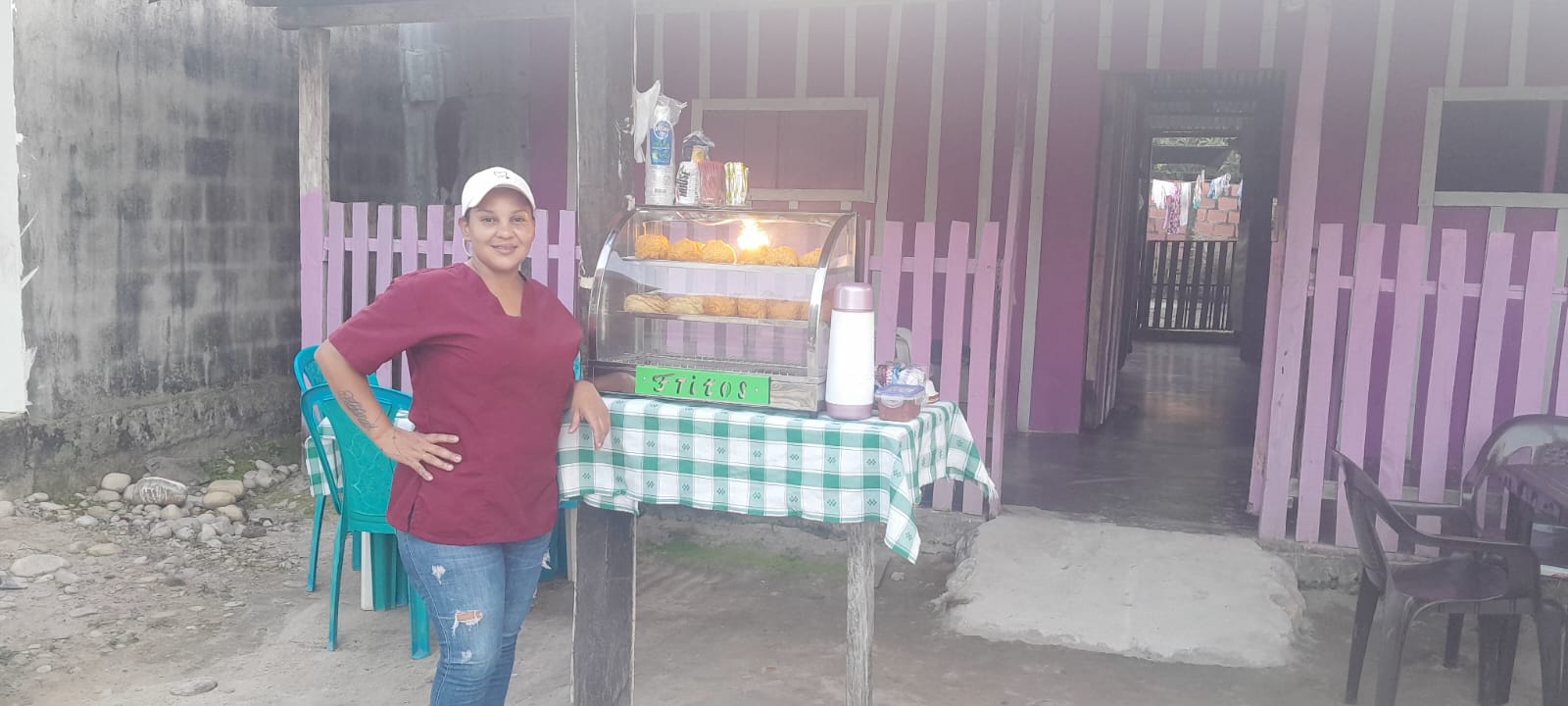
Egle Torres stands behind a small table on a busy street in Saravena, a town in northeastern Colombia near the Venezuelan border, carefully arranging golden, freshly fried stuffed potatoes.
Not long ago, this scene would have been hard to imagine.
Seven years ago, Egle fled Venezuela’s deepening political and economic crisis, leaving behind her two teenage sons in the hope of building a better future. In Colombia, she faced uncertainty. Work was scarce, and as a Venezuelan woman, she faced stigma and limited opportunities. She moved between odd jobs, eventually working as a cook on a remote farm, living with her partner and their young daughter.
The situation was not safe. Her partner controlled her money and subjected her to verbal and psychological abuse. The farm was isolated, far from health care, food and jobs. Egle had little independence, and few choices. She said she knew she had to leave.
While applying for salvoconducto, a temporary permit that allows a foreign national to remain in the country legally while resolving immigration status, Egle was referred to the Lutheran World Federation (LWF). She was selected for support through a $6.2-million program, funded by the Government of Canada and Canadian Lutherans, helping nearly 50,000 people in Colombia and Haiti. The program supports women and girls affected by conflict and violence, offering safe spaces, counselling, cash assistance, clean drinking water and dignity kits with essentials like shampoo, soap and menstrual products.
Egle received a one-time payment of 620,000 Colombian pesos — about C$225 — along with a dignity kit. This support was life changing.
“When I learned I would receive the support, I could hardly breathe,” she said. “The first thing I did was get on my knees and thank God. I was going through a very hard time.”
She didn’t wait. Egle used the money to buy what she needed to start a business: a food warmer, a table and chairs. She began cooking the foods she knew best — recipes people had praised when she worked on the farm.
“I don’t know anything about business,” she said. “But I have two hands, and I know how to cook.”
Today, her small stand sells papa rellena — stuffed potatoes filled with meat, rice and egg — and pizza empanadas. She earns about 36,000 pesos a day, roughly C$13. It is enough to cover rent, utilities and care for her daughter.
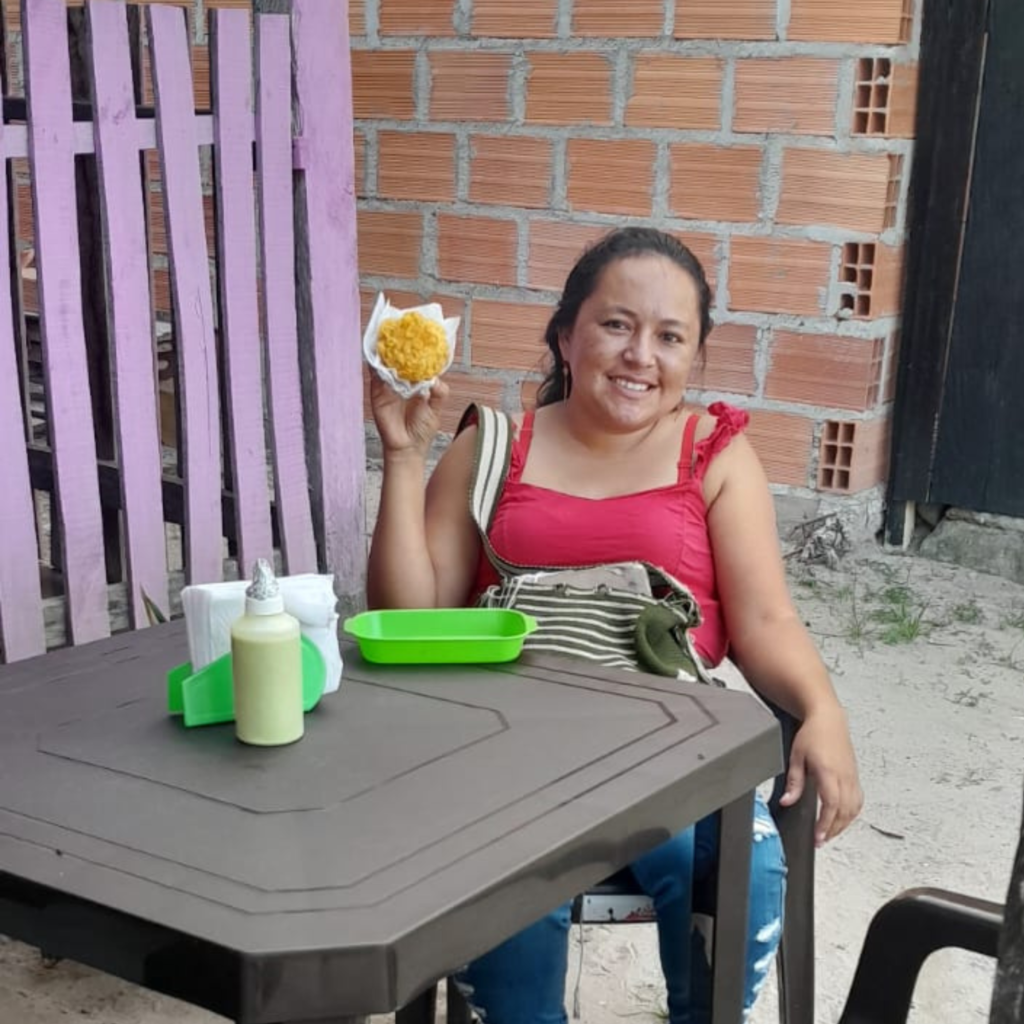
Customer indulges at Egle’s food stand. (Photo courtesy of Egle Torres)
Just as important, it gives her independence. The cash she received did more than help her start a business; it gave her space to think beyond survival. She enrolled her daughter in kindergarten so she could work and began to rebuild a sense of stability.
In a message to her case worker, she wrote: “This has been very important for me and my daughter. We could buy the table, chairs and food heater I needed. Thank you. I am excited to provide for my daughter. This is because of your help.”
Without that support, Egle says her life would look very different. She believes she would still be working on farms or facing far riskier options. In Saravena, formal jobs are difficult to access, especially for Venezuelan women. Many are pushed into unsafe or exploitative work just to survive.
Instead, Egle now earns her own income in a safe environment. She decides how to spend her money. She is raising her daughter on her own terms.
For Natalia Sierra Garavito, the LWF case management technician who worked with Egle, the impact goes beyond economics.
“When support is provided with dignity and respect, it helps rebuild trust and allows women to move forward with their lives,” she said.
Egle is already thinking ahead. She hopes to expand her business with larger pots, a food processor and a freezer so she can prepare more food and increase her income.
For now, she focuses on what she has built: a small business, a steady income and a safer future for her daughter.
“This kind of help is very important,” Egle said. “Especially for women like me who want to work and do the right thing.”
Now, each day, as she serves customers from her stand, she is doing exactly that.
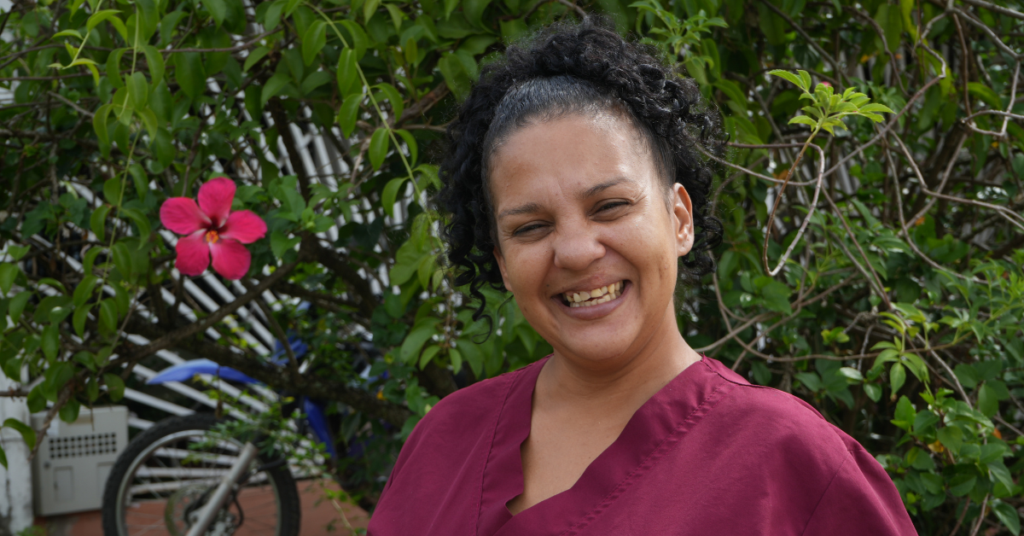
Elge Torres says the support she received from CLWR and LWF has helped her start a small business in Colombia, which has change her life. (CLWR photo/Shauna Turnley)
Top image caption: Egle Torres stands behind her papa rellena stand in Saravena, Colombia, preparing food to sell and support her daughter. Her small business is possible thanks to the generosity of Canadian Lutherans and Global Affairs Canada. (Photo courtesy of Egle Torres)