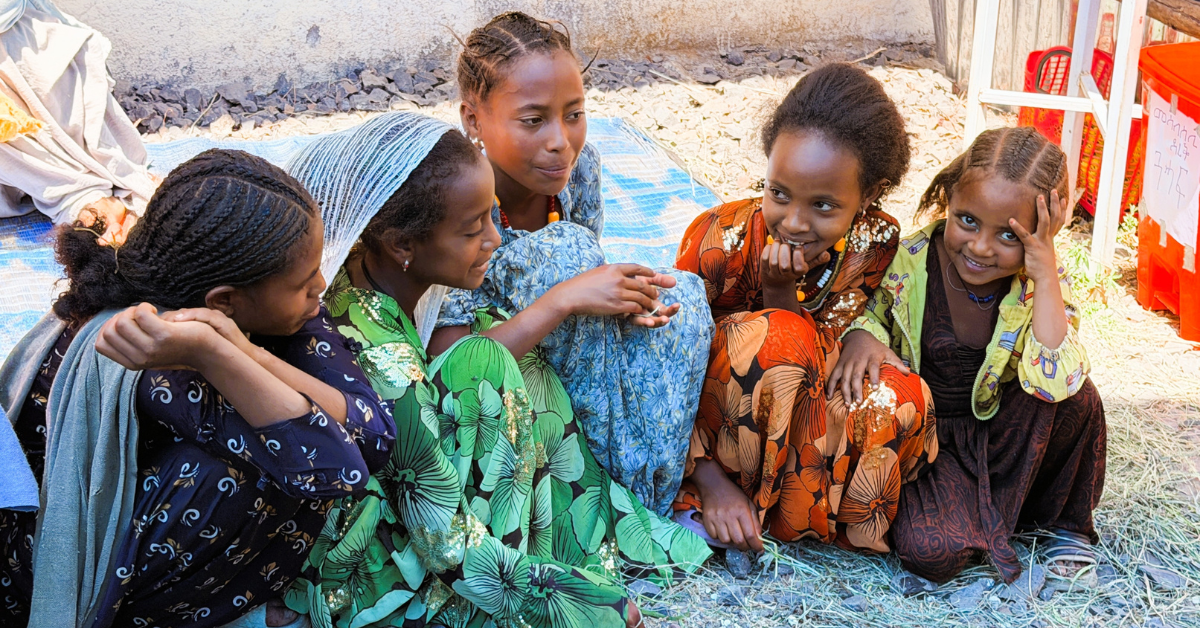
During conflict, safe spaces in northern Ethiopia offer women and girls a place to rest
“I had nothing before the centre. Everything was destroyed during the war,” says Genet Negas, sitting with her baby in a women and girl friendly safe space in Tigray.
Across parts of Tigray and Amhara in northern Ethiopia, women and girls are rebuilding their lives after conflict and repeated displacement. Genet’s community has been occupied by multiple armed groups, a situation that continues today andexposes women, girls and men to ongoing violence. The centre has become one of the only places where she can pause, talk and begin to feel stable again.
“Now I can come here, I can relax. I have a healthy mind,” Genet says.
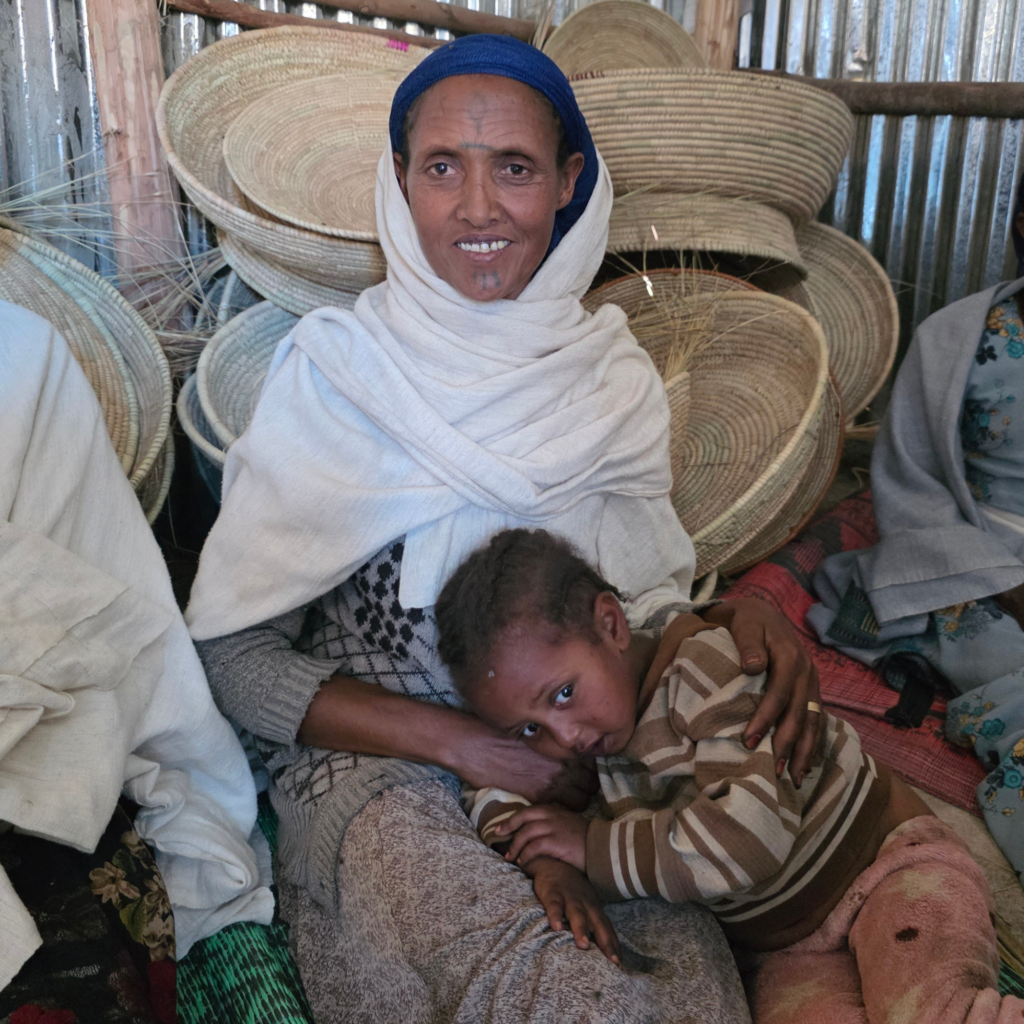
In these conditions, having a safe place to go matters. Safe spaces offer women and girls a place to talk with staff, access counselling and health referrals, and take part in skills training such as weaving and basket making that can help them earn income and support their households.
At the centres in Tigray, women and girls come for different reasons. Some seek counselling or support after experiencing gender-based violence, which can be intensified by conflict. But the centres are open to all women, including adolescent girls who come after school to learn hairstyling, decoration and handicrafts while staying connected to school.A childcare space allows mothers to attend sessions or rest while their young children are cared for nearby. Others simply come because it is a safe place to rest.
Hadas, a case worker, says the centres are built around how people are treated when they arrive.
“The most important thing is maintaining the dignity of the survivor,” she says. “They might come for health concerns, legal questions, support after violence or just to talk. The space allows them to come without having to explain.”
The project began with one safe space for women and girls in Tigray. As insecurity increased and travel became more difficult, two additional satellite centres opened closer to where people live so women and girls could access support more easily.In Lalibela, in Ethiopia’s Amhara region west of Tigray, the same women and girls’ safe space model operate, supporting both adult women and adolescent girls. The centres are open to all women and girls including those who may not have reported violence but still need support. There, staff support girls with counselling and help them connect with health services and, when needed, police or protection services. For many women and girls the centre is more than a place to access services, it has become a space to connect with others and feel less alone.
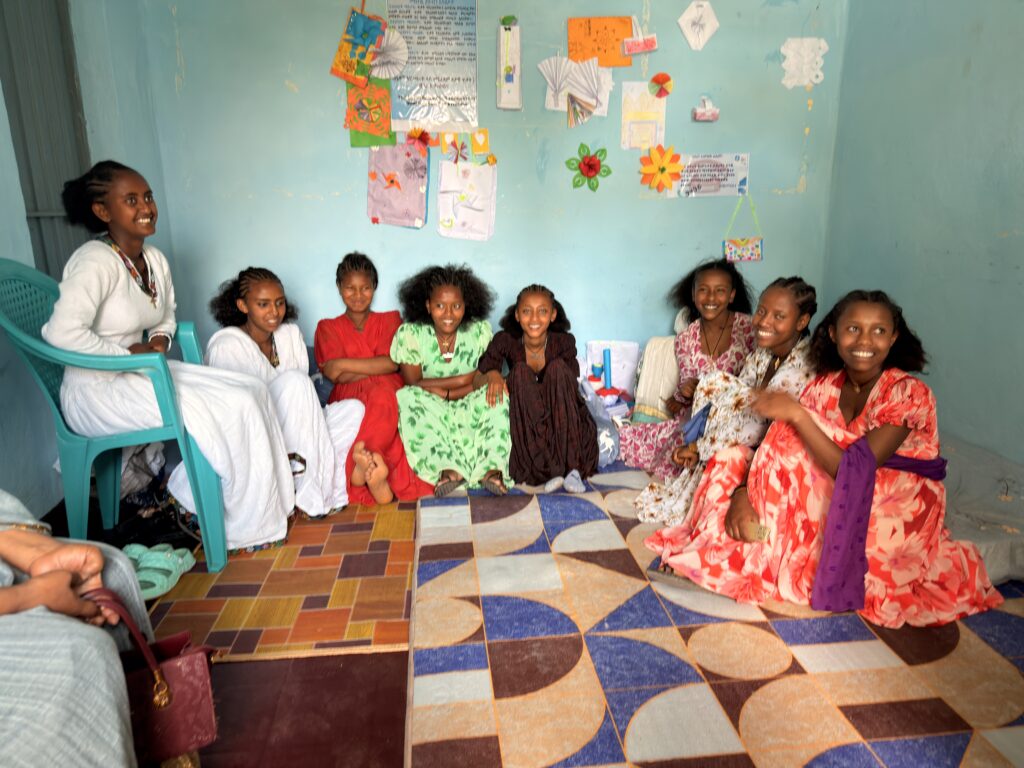
Some girls who first came for support now return as volunteers, teaching younger girls skills such as sewing, tailoring and basket weaving, extending the impact of the centre within their own communities.
To strengthen responses to gender-based violence, the project is training 316 government staff and community representatives on how to recognize, prevent and respond when women and girls are at risk or have experienced harm.
To meet immediate dignity and hygiene needs 1,676 women and 2,409 girls from displaced and host communities will receive dignity kits at the centres. The kits include reusable sanitary pads, underwear and soap.
Across Amhara and Tigray, six safe spaces are being established — three in Sekota, Habru and Lasta woredas, and three additional centres, including two in Amhara and one in Tigray — bringing support closer to more communities.
For many women and girls, these spaces have become one of the only stable points in an otherwise uncertain environment: places to talk, access support and begin rebuilding daily life with dignity.
Top image caption: Children Hiwot Berhugn, Mahlet Hadis, Lemlem Asefa, Alemtsehay Tesfay, and Melat Kasegn play in the daycare at a women- and girls-friendly safe space while their mothers access support services in Neqsege District, Ethiopia. The centre is supported by Canadian Lutheran World Relief and the Lutheran World Federation with funding from the Government of Canada. (CLWR photo/Joanna Roidis)