Farmers around Lake Chad are fighting back against climate change
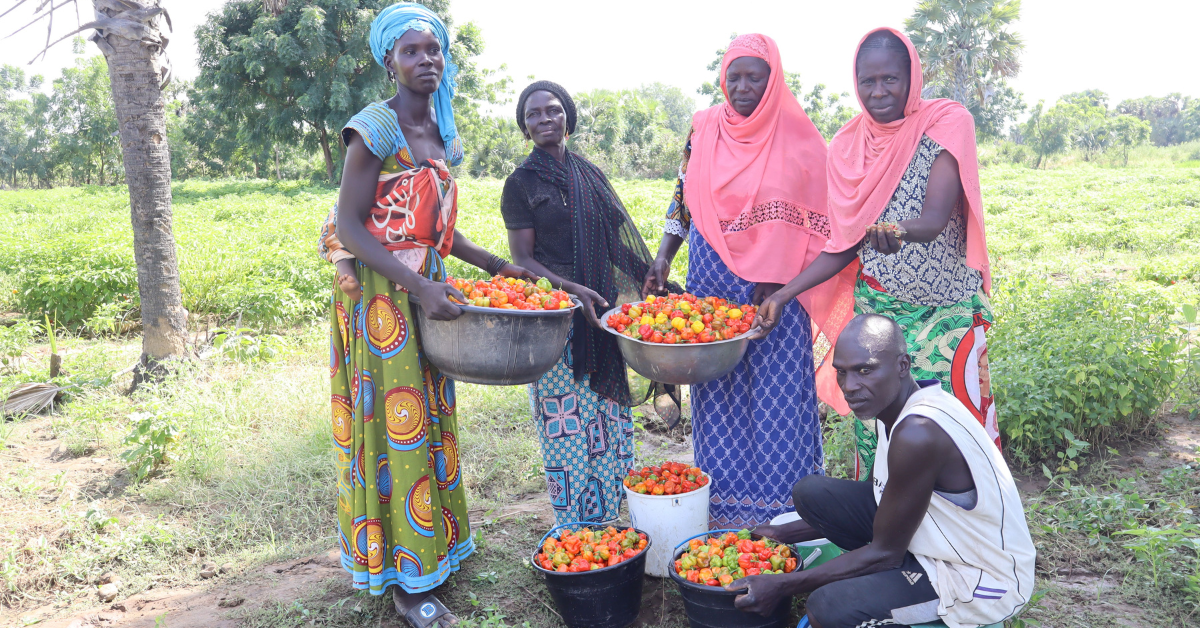
A group of 28 farmers in the Lake Chad Basin are on the front lines of a climate crisis that is damaging their crops and threatening their incomes.
Members of the group, who call themselves Diri Marmou — let’s love one another — say they used to harvest 50 sacks of chillies from one hectare in a single season. Now, it’s less than half.
Erratic rainfall, prolonged heat and declining soil conditions have made farming increasingly difficult. Local farmers say crops are smaller, less flavourful and more vulnerable to pests and disease. Some plants are dying before reaching maturity.
Seasonal patterns have also shifted. Cooler temperatures that once arrived in October, essential for crops like rice, tomatoes and onions, now come as late as December, shortening growing cycles and reducing yields.
In 2023, the community experienced a complete failure of its tomato harvest. When there is no harvest, there is no income, farmers say. They are forced to eat the same meal for months just to get by.
With support from Global Affairs Canada and the generosity of Canadian Lutherans, farmers in the Lake Chad Basin are learning new ways to adapt.
This is made possible through a three-year, $17.2 million initiative designed in consultation with local communities and implemented jointly by Canadian Lutheran World Relief and the Lutheran World Federation. To help improve their yields, farmers receive training in climate-resilient farming techniques, including row planting, producing natural pesticides to protect crops from pests and extreme heat, and spacing seeds properly to improve growth. They also receive high quality seeds, which were often difficult for farmers to afford.
The project is expected to directly benefit more than 128,000 people, while an additional 640,000 will benefit from improved environmental conditions in rehabilitated areas.This includes restoring damaged ecosystems, strengthening local governance and helping people earn a living in ways that can withstand climate change, especially women and girls.
In the village of Bougourma, Cameroon, farmer Kakami Ali is already seeing the difference on his land. He relies on a nearby borehole — owned by his brother — to irrigate his field because rainfall is scarce and the river is far away.
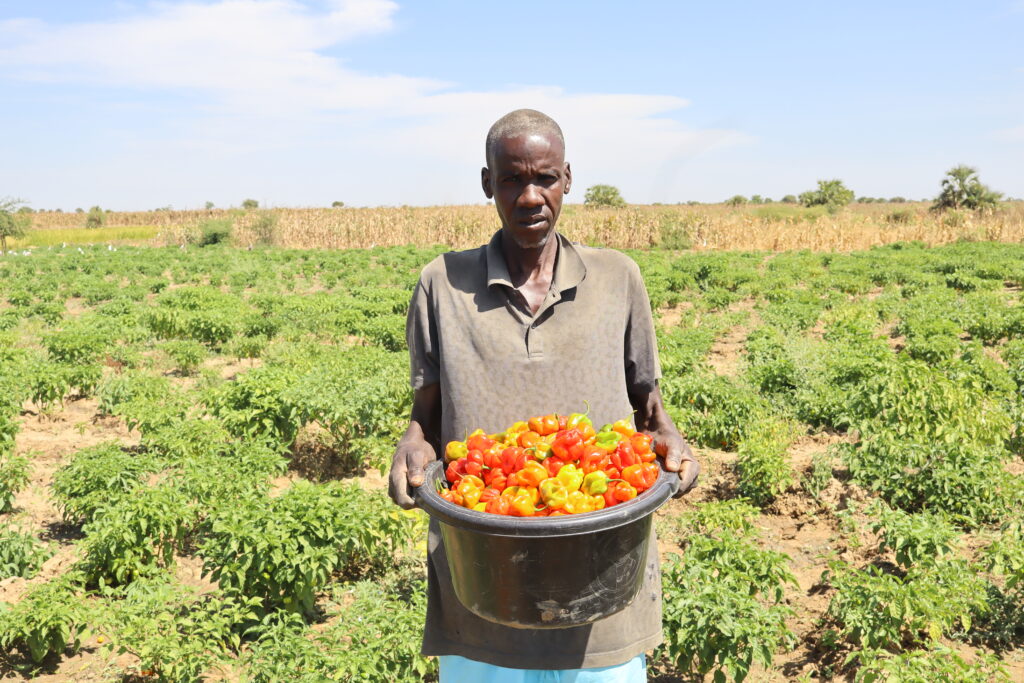
Farmer Kakami Ali lifts a basin of chillies harvested from his field in Bougourma, Logone Birni, Cameroon. (LWF photo/Sylvain Youta)
Ali says getting good seeds is not easy, but with support from the project, he now has access to quality seeds, which has made a significant difference in his harvest.
He received seeds for chillies, okra, onions, tomatoes and millet, along with farming tools. He has also taken part in training on composting, producing natural pesticides, transplanting and the Zaï technique — a traditional soil restoration method that helps retain water in dry conditions. He has also applied crop rotation to improve soil fertility and reduce pests.
The results have been immediate. In less than two months, Ali says he has already harvested three times: three sacks in the first harvest, six in the second and 10 in the third, with several more harvests still ongoing. Each sack sells for 15,000 CFA francs, or about C$35.
Ali says this progress was possible because of the training, supplies and seeds he received and discussions with other farmers.
Back in the wider community, the Diri Marmou group is experiencing similar improvements. After receiving seeds in mid-2024, members began cultivating chillies using the new techniques learned through the project. They now harvest weekly with more yields expected before the end of the season.
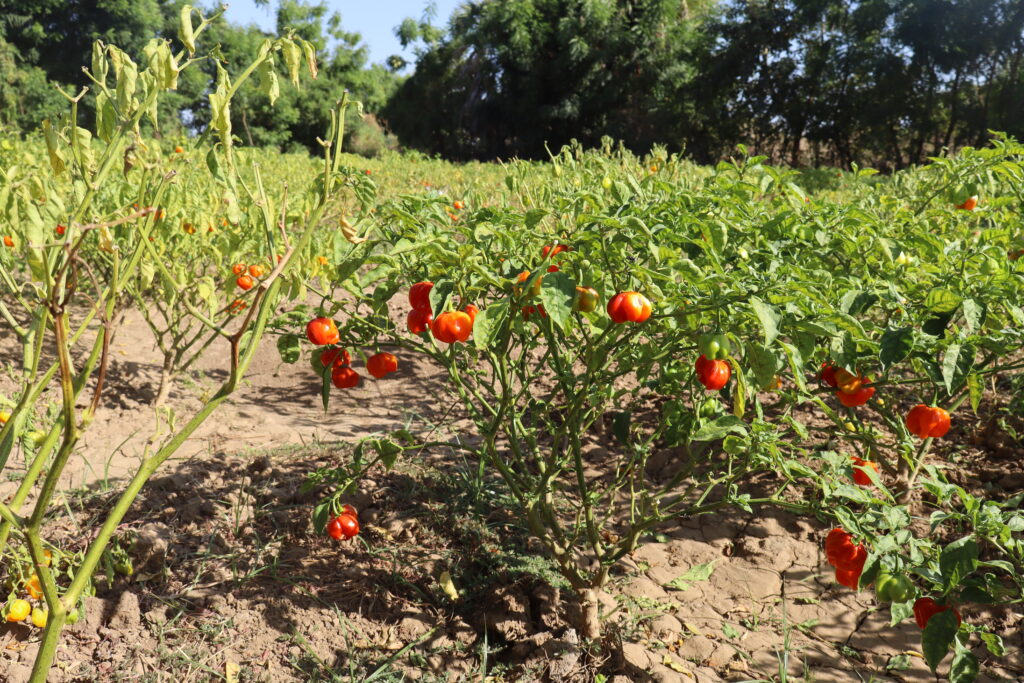
Harvest from the Diri Marmou farming group in Ouloumsa, Cameroon. (LWF photo/Sylvain Youta)
Top image caption: Members of Diri Marmou gather during the chilli harvest on the community plot in Ouloumsa, Cameroon. (LWF photo/Sylvain Youta)