For such a time
By Jennifer Ardon
If you or your congregation have recently tried to sponsor refugees you’ve probably noticed it’s gotten harder than it used to be. Your sponsorship has likely been placed on a waitlist with limited information of when it will move forward. This isn’t just chance, we’re witnessing the erosion of Canada’s private refugee sponsorship program in real time.
There have been three significant changes to the private sponsorship of refugees program (PSRP), which are making it harder for Canadians to sponsor refugees.
The first is over the last few years, Immigration, Refugees and Citizenship Canada (IRCC) has seen its budget reduced. This has resulted in staff layoffs and cuts to settlement programing, meaning it takes longer for applications and other paperwork to be processed.
A second change has been a temporary pause in the intake of new applications for Group of 5 (G5) Sponsorships and Community Sponsorships in order to try and clear a backlog of applications. But this means that private sponsorships all have to be done through Sponsorship Agreement Holders (SAHs), like CLWR) so even more people are competing for a smaller number of spaces.

The third is the government has significantly reduced the number of refugees allowed to be resettled in its 2025-2027 immigration levels plan. For 2026 all SAHs across Canada can collectively sponsor only 5,000 people. This is a 54% reduction from 2025, when SAHs were able to sponsor 10,800 people. That means that despite the growing needs we can’t even sponsor the same number of refugees as previous years, let alone increase in the number of people we can bring to Canada each year. Sponsorship agreement holders like CLWR end up keeping long waitlists without knowing when we can submit the ever-growing list of sponsorship requests.
These changes combined mean that unfortunately the refugees you sponsor will not be arriving in Canada any time soon. At CLWR, we have seen first-hand the harms these delays and reductions cause. Refugees have passed away because they couldn’t get the necessary medical treatment in their countries of asylum. Others have been deported from their countries of asylum before their cases could be finalized, putting their lives at extreme risk.
A shift in priorities and values
The irony is that only a decade ago, Canada was touting its refugee resettlement program as a model for the rest of the world. It even funded the Global Refugee Sponsorship Initiative (GRSI) which allowed seasoned Canadian sponsors to train community groups across the globe on refugee sponsorship after we sponsored tens of thousands of Syrian refugees in a short period of time.
So, what changed? Why this sudden divestment in refugees by our government? The last few years have shown a noticeable shift in public opinion about refugees and immigrants. Living in the aftermath of a pandemic, a housing crisis, sky-high inflation, threats of tariffs and economic collapse, as well as global wars and genocides, people need a scapegoat for things they cannot control. Unfortunately, throughout history, immigrants (including refugees) have been the scapegoats for anything wrong in society.
This recent anti-immigrant sentiment has gained momentum and is influencing our public policy. Anti-immigrant lies are even being spread by Canadian Members of Parliament. Our representatives are blaming refugees and immigrants for the housing and health-care crisis despite the fact that declines in affordable housing and health-care services have been issues for a long time with many political leaders unable to solve them.
A Lutheran legacy of care for refugees
Considering the many conflicts and human rights violations that have displaced 117.3 million people worldwide (according to the UNHCR), it is now more urgent than ever to welcome refugees. Helping refugees is a Lutheran tradition in this country; it is our heritage, and it should be our legacy.
Canadian Lutheran World Relief was founded by concerned Lutherans in 1946 to help resettle displaced Lutherans from Europe to Canada. Not only can many Canadian Lutherans trace their ancestry to that migration, but those Lutherans then turned around and provided welcome to people in need for decades! That’s why private sponsorship through organizations like CLWR has been so widely successful. In its 80 years, CLWR has resettled over 30,000 refugees.
As Lutherans, as people of faith, it is our moral imperative to help refugees. Time and again, the Bible makes it clear that we must help the foreigner and treat others as we would like to be treated. It is our obligation to speak out against injustice: “to whom much is given, much is expected.” This includes the vital, hands-on work of sponsorship, but also advocacy to protect refugee rights.
Speaking out to protect refugee rights
We’ve seen in our recent history how speaking out has had the ability to change public policy. In 2012, when the Canadian government introduced major cuts to refugee health benefits full coverage was reinstated after public outcry. We’ve also seen grassroots advocacy encourage the government to create expedited resettlement processes with Syrian and Afghan refugees. It’s clear that the government has the capacity to change its policies, but they need to hear the will of the people to do so.
The story of Esther reminds us that we cannot remain silent when people are in trouble: “And who knows but that you have come to your royal position for such a time as this?” (Esther 4:14). With so many things going on in the world and Canada’s policies limiting rights to vulnerable populations, it is not the time to be complacent, but to “overturn the tables” of injustice and act out our faith principles! If we have the power and courage and we can make a difference, shouldn’t we?
If you feel strongly about refugee issues and you’d like to champion refugee rights, we hear you! In the coming months, especially in the lead up to World Refugee Day on June 20th, CLWR will be developing resources to help your congregation engage with refugee issues, understand more about the state of Canada’s refugee sponsorship program and advocate for refugee rights.
Currently, CLWR is supporting the “We’re Better Together” campaign developed by the Canadian Council for Refugees (CCR): https://bettertogethercanada.ca/. We encourage you and your congregation to use their resources to combat negative rhetoric about refugees and immigrants.
If you have any questions or concerns regarding this opinion piece, please contact jardon@clwr.org.
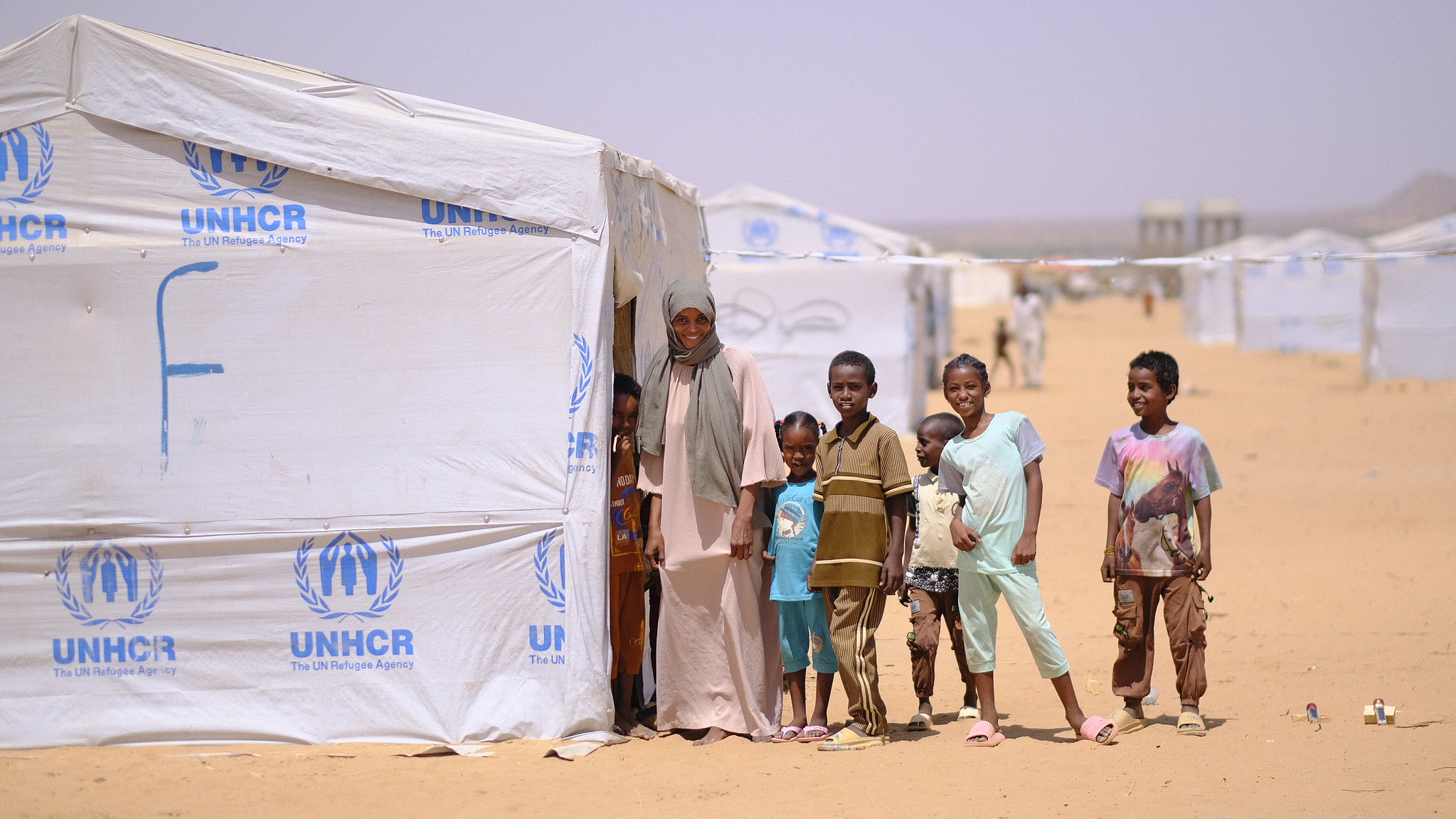
Top photo caption: Sabah is a Sudanese refugee living in the extension area of Arkoum refugee camp in Eastern Chad. She stands outside her shelter, together with her children and other displaced community members. (LWF photo/Marie Reneaux)