How Canadian Lutherans are supporting women in South Sudan
At just 14 years old, Nyandeng nearly died giving birth to her first child.
She had been married to a man nearly four times her age. When complications during childbirth put both her and her baby at risk, Nyandeng was connected to urgent medical care through a women and girls’ safe space in her community. Today, both are healthy.
But life remains difficult.
Now 15, Nyandeng is raising her baby alone after her husband abandoned the family. She continues to visit the women and girls’ safe space in Panyagor, South Sudan where she lives. The centre is supported by Canadian Lutheran World Relief (CLWR) and Lutheran World Federation (LWF), where she receives counselling and emotional support and learns practical skills such as liquid soap making. The support is helping her regain confidence and hope for the future.
Nyandeng is one of thousands of women and girls benefiting from a regional program led by CLWR and LWF and is supported by the Government of Canada and the generosity of Canadian Lutherans. The initiative is supporting more than 100,000 people across South Sudan, Ethiopia and Somalia.
Nyandeng’s story began with a safe space.
A safe space gave Nyandeng a second chance — and her baby a first one.
Today, more women and girls are waiting for that same protection. Your generosity helps them find it.
Protect a mother and childThe program helps women and girls recover from violence by providing counselling, dignity kits with hygiene supplies, and cash support. At the same time the project works with communities to help prevent gender-based violence through awareness sessions and by improving access to safer water and sanitation facilities.
For Glenda, an LWF staff member in Panyagor, the changes in the community are clear.
“Women are now more secure than they used to be,” she says. “When we do awareness sessions, women learn how to protect themselves from gender-based violence.”
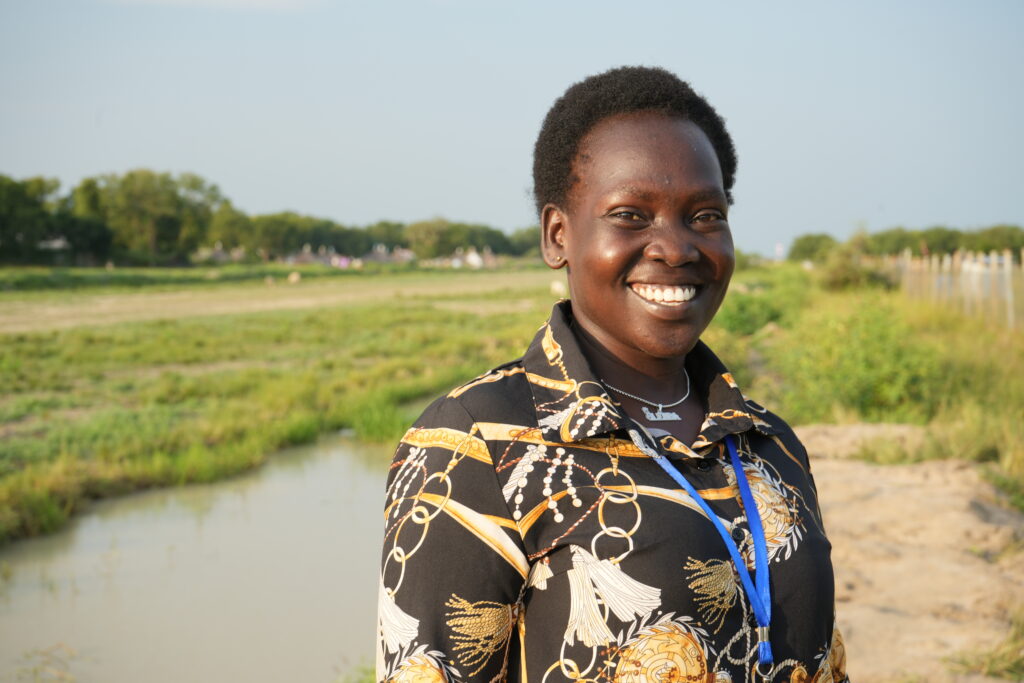
Glenda, an LWF staff member in Panyagor, South Sudan, supports women and girls through a community safe space program focused on counselling and recovery from violence. (CLWR photo/Shauna Turnley)
She says thanks to educational campaigns women now travel together when collecting water or firewood, so they are less vulnerable to attacks in isolated areas. Women visiting the centre also receive counselling that helps them navigate violence and conflict at home.
The centre distributes dignity kits containing sanitary pads, towels, toothpaste, toothbrushes, sandals and undergarments. For many women and girls, these items improve hygiene, comfort and dignity.
“We have seen a lot of changes,” Glenda says. “Some women who were very vulnerable received cash support and started small businesses. Their lifestyles and nutrition have improved.”
One of those women is Ayak Kuir Mabior.
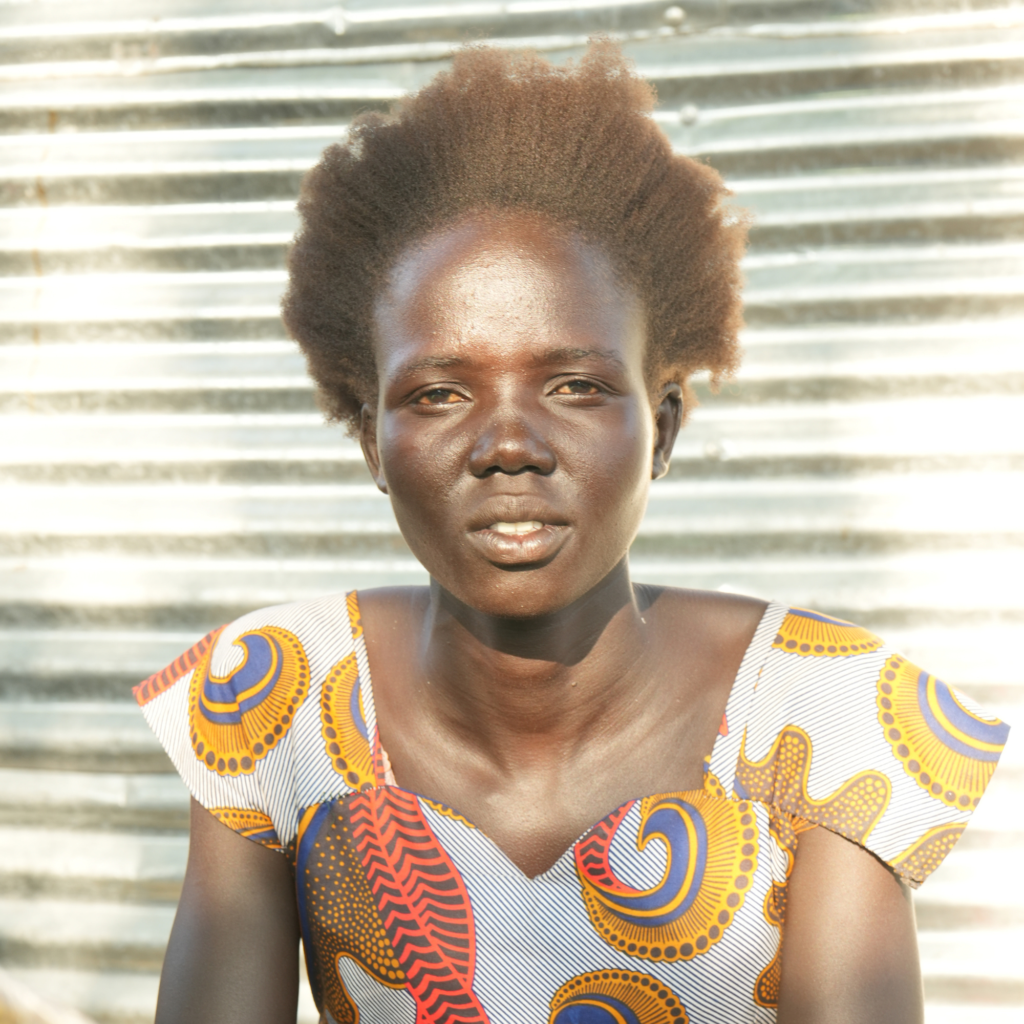
Ayak Kuir Mabior sells lima beans and cooking oil at her stall in Panyagor, South Sudan. With a cash grant from a CLWR and LWF-supported project, she started her business and is supporting her family. (CLWR photo/Shauna Turnley)
Ayak first heard about the women and girls’ safe space from other women in her community. They told her it was a place where women could receive support, heal and rebuild their lives.
After visiting the centre, Ayak received a cash grant. She used the money to pay for her child’s medical care, support her household and start a small business selling cooking oil and lima beans.
“The support has really changed my life,” she says.
Ayak still visits the centre for counselling and emotional support. She believes programs like this are critical for women experiencing violence and hardship.
“They can heal, grow and regain independence,” she says.
For Glenda, the work is deeply personal. Inspired by her mother, who trained as a midwife so her children could access education, she wants more girls and women to have opportunities to support themselves and become leaders in their communities.
“I feel so good doing this work,” she says. “We are role models in the community. I want my sisters to rise the way I have and do even better.”
*Nyandeng’s name was changed to protect identity.
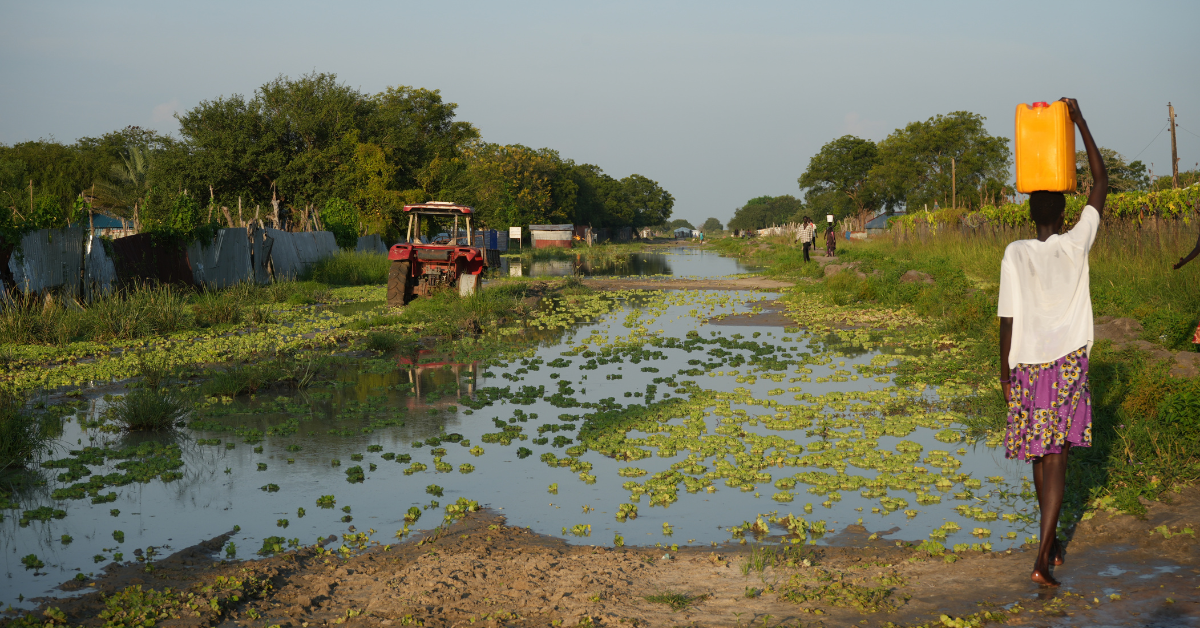
Top image caption: A young girl carries a container of water on her head in Panyagor, South Sudan. In this community, water collection is primarily done by women and girls, often requiring long and unsafe journeys. A CLWR and LWF-supported project is helping reduce this burden by installing new boreholes in safer, closer locations. (CLWR photo/Shauna Turnley)