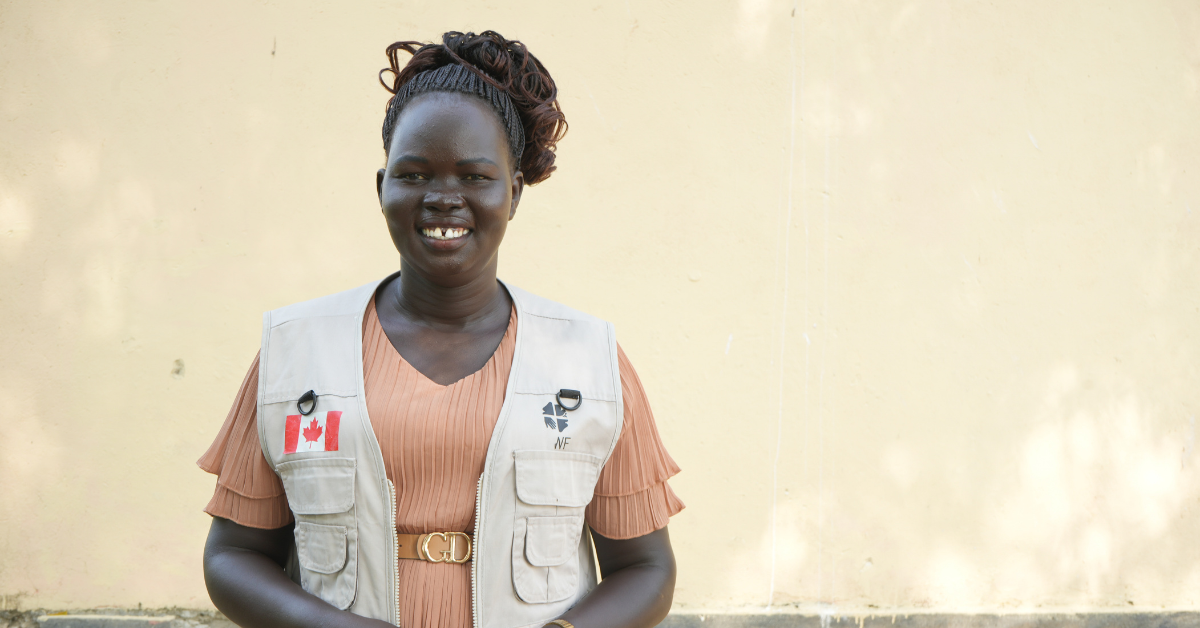
“I can defend others now,” says South Sudanese woman who empowers survivors
PANYAGOR, South Sudan — Rachael Kuol was 17 when she was married.
While early marriage can often mean the end of a girl’s education and independence that was not the case for Rachael.
“When things fall apart, that is not the end,” she says now.
At 35, she works as a gender-based violence (GBV) project officer with the Lutheran World Federation in Panyagor, in South Sudan’s flood-prone Jonglei State. The message she shares with women and girls is one she has lived: early marriage did not end her education, and it did not define her future.
After marrying, Rachael returned to school, earned a diploma in social work and social administration, and began supporting survivors of violence in her community.
“I have seen a lot of cases happening in my society, and they affect mostly girls and women,” she says. “So, I said, ‘let me help my fellow women.’”
She meets survivors when they’re still in distress, uncertain where to turn. She meets them where they are — sometimes in the centres, sometimes at her own door — and helps them take the first steps toward recovery.
“I can now defend other people,” she says. “And I can give them hope for life.”
She does that by leading community outreach and running four women- and girl-friendly spaces supported by Canadian Lutheran World Relief, the Lutheran World Federation and Global Affairs Canada. The centres are safe spaces where women can gather, share stories, and talk over a cup of tea, and they can also learn new skills like sewing or soapmaking. They can get help accessing medical care or reporting abuse. Through these meetings, some women are identified to receive cash assistance to improve their situation — whether that means building a shelter, starting a small business or growing a vegetable garden.
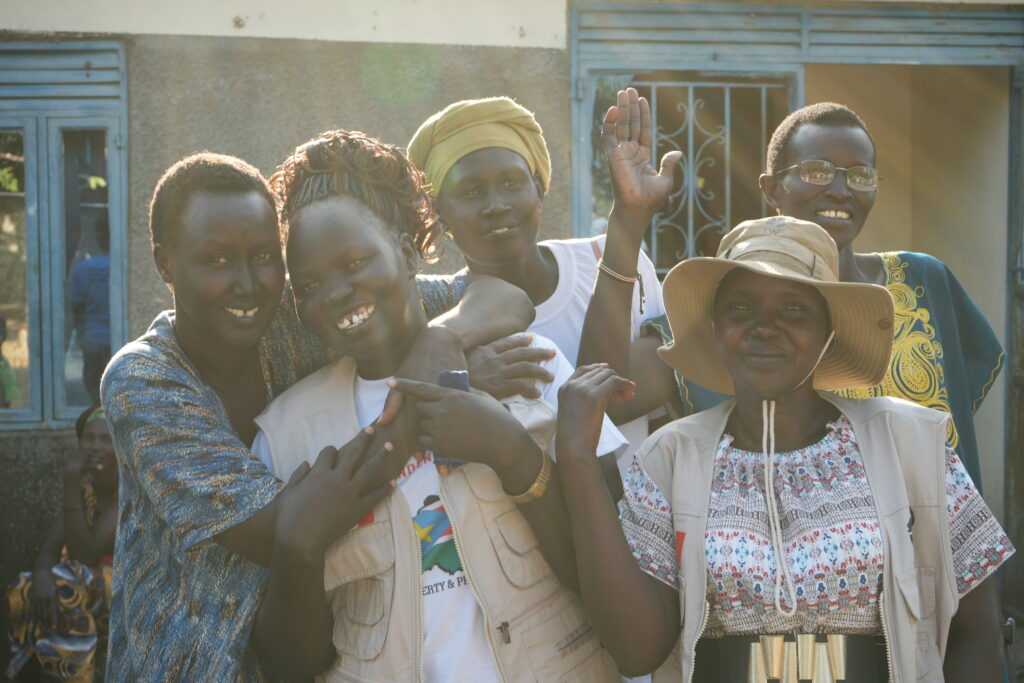
In Panyagor, South Sudan, women embrace Rachael Kuol, a gender-based violence officer and a trusted figure in the community. Through her work, she supports women and girls with access to services, safe spaces, and ongoing care. (CLWR photo/Shauna Turnley)
In a region shaped by flooding, displacement and intercommunal violence, access to those services is not guaranteed.
“There are a lot of disasters that happen, and those things traumatize women and children,” Rachael says. “Before this project, it was very hard for women to cope.”
Rachael’s story began with someone who listened.
Once a survivor, Rachael now stands for women across South Sudan.
Today, more women are waiting to be heard and protected. Your generosity makes that possible.
Stand with survivorsRachael’s team works across Twic East County and Duk County, where few humanitarian organizations still operate. In some areas, they are the only providers of dedicated GBV services. Building trust takes time, she says — and without it, survivors remain silent. “If there is no trust, they will never report,” she says.
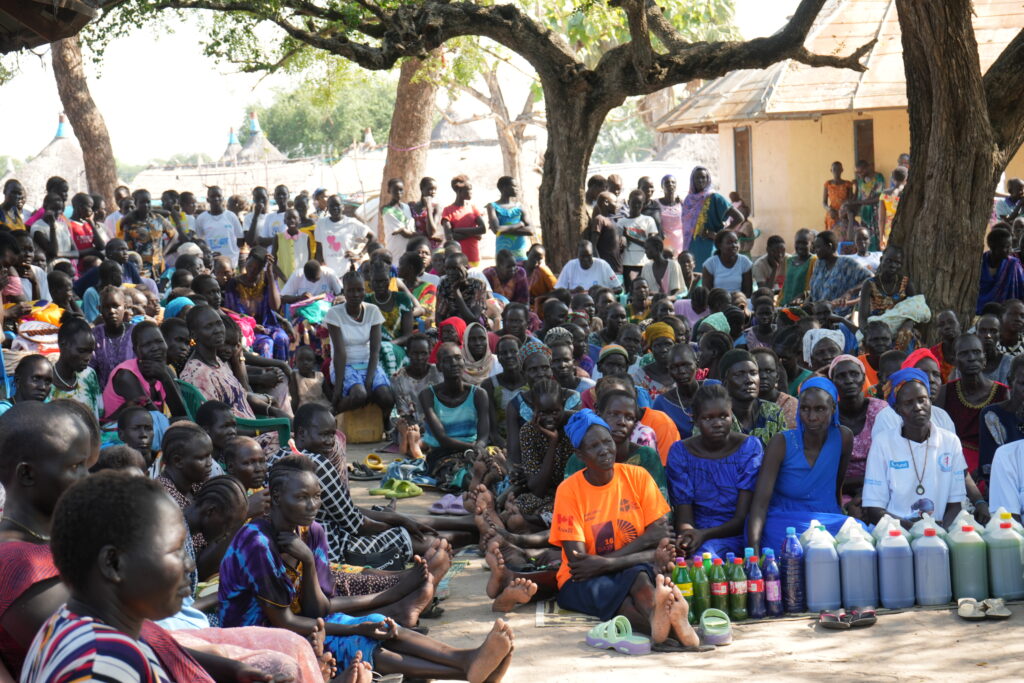
Women gather in Panyagor, South Sudan, to meet with staff from LWF and CLWR and discuss the impact of a community project supporting livelihoods and recovery. Many participants have learned skills such as sewing and soap making through the program, which also provides safe spaces for dialogue and support. (CLWR photo/Shauna Turnley)
To build that trust, staff move through the community, speaking with families, leaders and survivors. Some women come directly to Rachael’s home to ask for help. At the centres, they join group discussions, receive counselling and learn practical skills.
Rachael shared a story of one woman, who is deaf and whose relatives seized her family’s assets, but with the support she received she’s now able to runs a small business to support her children. Others have used cash assistance to start small trading activities or invest in fishing, selling their catch locally and across borders.
Rachael insists that support must go beyond counselling.
“If you provide counselling but you do not address economic needs, you have not addressed GBV fully,” she says. “We mitigate, we respond, and we prevent.”
Her work forms part of a broader regional initiative running from June 2024 to June 2026, supporting more than 100,000 people across South Sudan, Ethiopia and Somalia. The program combines survivor support with prevention —training local authorities, engaging men and boys, improving water access and building safer sanitation facilities to reduce risk.
But demand continues to outpace resources.
On a recent day, dozens of women gathered at one centre. Not all could be enrolled.
“They have seen the impact,” Rachael says. “They want to join.”
Each centre costs about $10,000 Canadian per year to operate — covering facilitators, case workers and basic supplies. Rachael hopes sustained funding will allow the program to expand into harder-to-reach areas and continue beyond its current timeline.
“Change comes gradually,” she says. “If we leave when only a few have changed, they will be affected by the rest.”
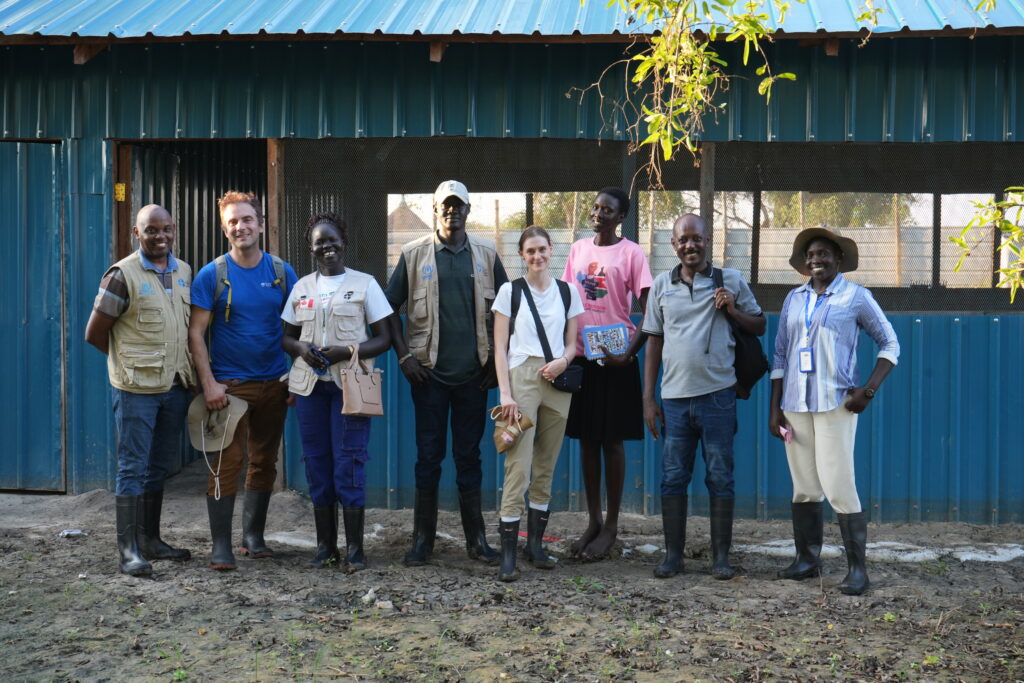
Staff from Canadian Lutheran World Relief and the Lutheran World Federation visit a newly built women- and girl-friendly safe space in Panyagor, South Sudan. (CLWR photo/Shauna Turnley)
Top image caption: Rachael Kuol, a gender-based violence (GBV) project officer with the Lutheran World Federation in Panyagor, South Sudan. Married at 17, she now works to support and empower survivors of violence in her community. (CLWR photo/Shauna Turnley)