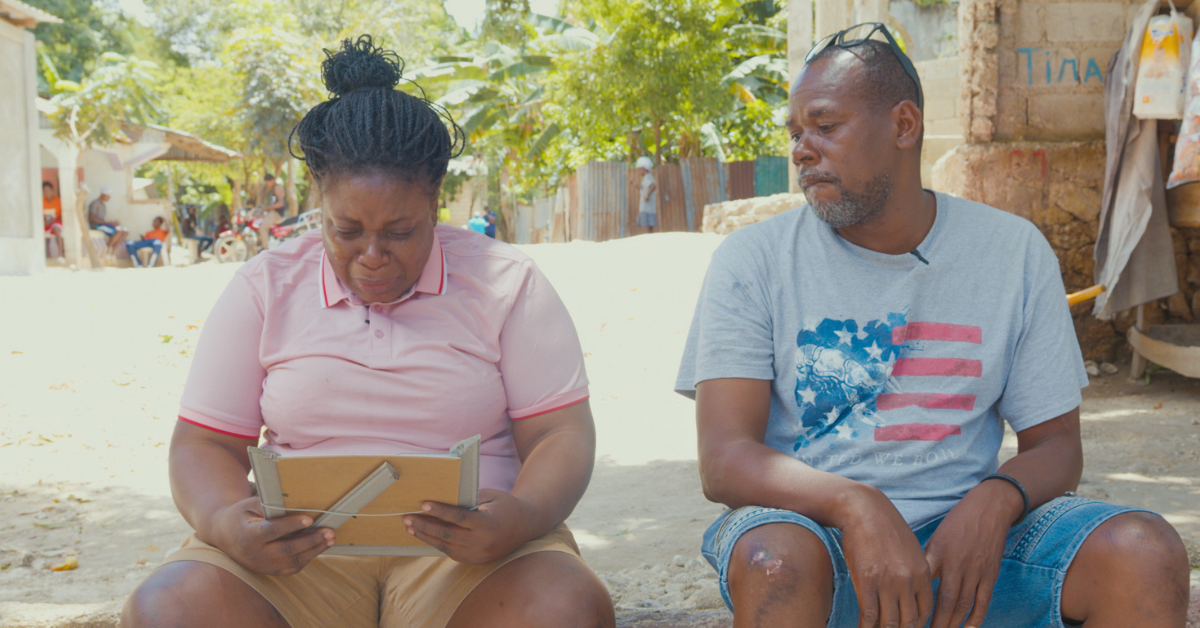
“I lost my child”: How a Haitian mother is rebuilding her life after Hurricane Melissa
FOND FABRE, Haiti — Natacha Septembre remembers the moment her home began to collapse.
“I felt the house being ripped apart,” she said. “I said, ‘Oh my God! What is this? Could it be an earthquake?’”
Her husband told her it was likely the wind. Then he told her they needed to get off the bed.
“Suddenly my husband jumped away, and the only thing I remember shouting was, ‘Save the child for me!’”
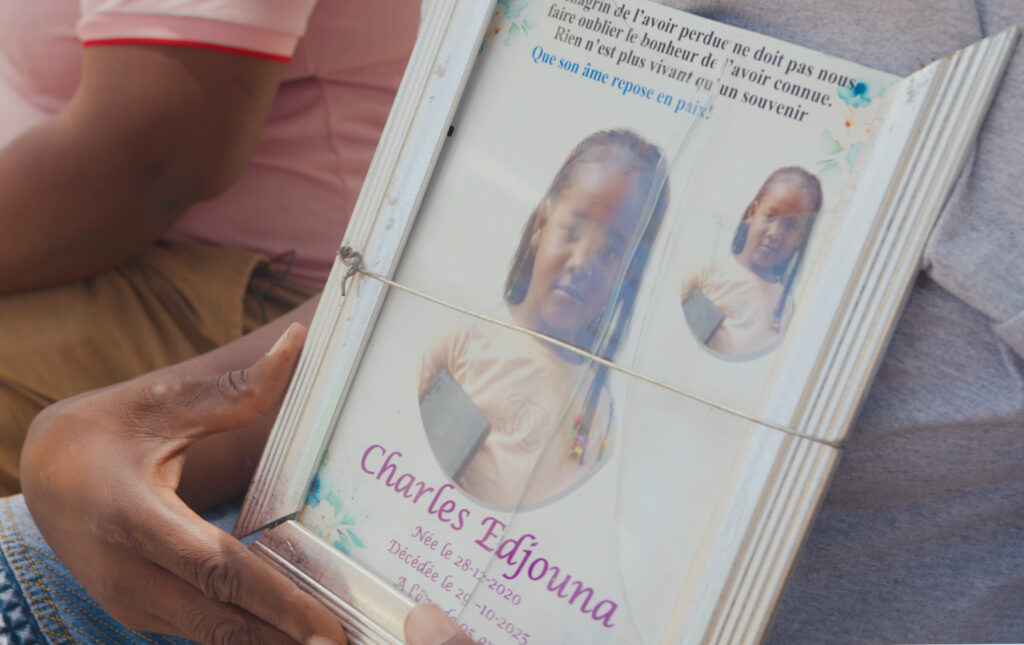
Within moments, floodwaters from Hurricane Melissa tore through their home in Fond Fabre, a rural community in southern Haiti. The storm separated Natacha from her husband, Edouard Charles, her sister Stephania Feriste and her five-year-old daughter, Edjouna.
Natacha survived. Her daughter did not.
“I lost my child. I had a little child I loved so much, and she died in the floodwaters,” Natacha said. “After that, I was left empty-handed, with nobody to turn to.”
Hurricane Melissa, the strongest storm of 2025, devastated communities across the Caribbean, affecting more than 8 million people, including more than 3 million children. In Haiti, heavy rainfall, flooding and landslides killed at least 45 people, damaged thousands of homes and forced families from their communities.
For Natacha, the destruction was both immediate and devastating. In addition to the crushing loss of her daughter, the hurricane destroyed her home, swept away her small business and erased the savings and belongings she had spent years building.
Before the storm, Natacha and her husband earned a living as merchants. She owned a shop and storage space where she sold goods to support their family.
But when the floodwaters receded, she was left with almost nothing.
And as she searched for her family after the storm, Natacha was also dealing with serious injuries. The floodwaters had torn open her leg, and the wound later became infected.
“I’m still standing,” thanks to the support from the project, Natacha said. “They provided me with first aid, and because of them my leg was not amputated.”
She eventually learned that her daughter had been found and taken for medical care. But by the time Natacha reached the hospital, Edjouna had died.
The scale of devastation for Natacha meant that recovering from Hurricane Melissa was not only about healing her physical injuries and the financial loss. Natacha and her husband struggled with grief and trauma after the death of their daughter.
They could not sleep. Each day brought memories of the storm and the child they had lost.
Help families rebuild after loss
Families like Natacha’s are facing unimaginable loss after Hurricane Melissa. Your support helps provide the care and assistance they need to recover.
Support families like Natacha’s
In the weeks after Hurricane Melissa, Natacha connected with Reseau des Organisations pour le Developpement des Palmes (RODEP), a local partner of Lutheran World Federation (LWF) Haiti. Through a CLWR-supported emergency response RODEP provided psychosocial support and emergency assistance to families affected by the storm.
At her first RODEP seminar, Natacha said she felt as though the discussion described exactly what she had experienced.
“I could not hold back anymore. I broke down,” she said. “Everything [they were] describing happened to me.”
RODEP staff listened to Natacha, spoke with her and supported her as she began processing her grief.
“When I encountered RODEP, it was like they rebuilt me,” she said. “Every time I attended RODEP seminars, it felt as though my life was coming back again, even though I had nothing left.”
Through counselling, community activities and psychosocial support, Natacha began to rebuild her sense of hope. She also met with a psychologist, who provided exercises to help her cope with trauma and sleep again.
“I used to spend entire nights awake, unable to sleep because of my thoughts,” she said. “But after meeting the psychologist, I was finally able to sleep.”
Alongside psychosocial support, Natacha’s family received emergency cash assistance to help meet their immediate needs.
The money did many things for us,” she said, explaining that it helped her purchase clothing and put food on the table for her family.
Today, Natacha continues to rebuild her life.
Natacha’s recovery was one part of CLWR’s five-month emergency response led by Lutheran World Federation (LWF) Haiti and its local partners, including RODEP, with funding from the Government of Canada through the Humanitarian Coalition.
The response provided 480 families affected by Hurricane Melissa with emergency cash assistance and hygiene supplies. It also rehabilitated five community water systems serving 11,350 people and provided services to prevent and respond to gender-based violence.
Top image caption: Natacha Septembre and her husband remember their five-year-old daughter, Edjouna, who died when Hurricane Melissa’s floodwaters destroyed their home in Fond Fabre, Haiti. They received psychosocial and emergency support from a CLWR-funded project implemented by RODEP. (CLWRphoto/Fairpicture/Reginald Louissaint Junior)