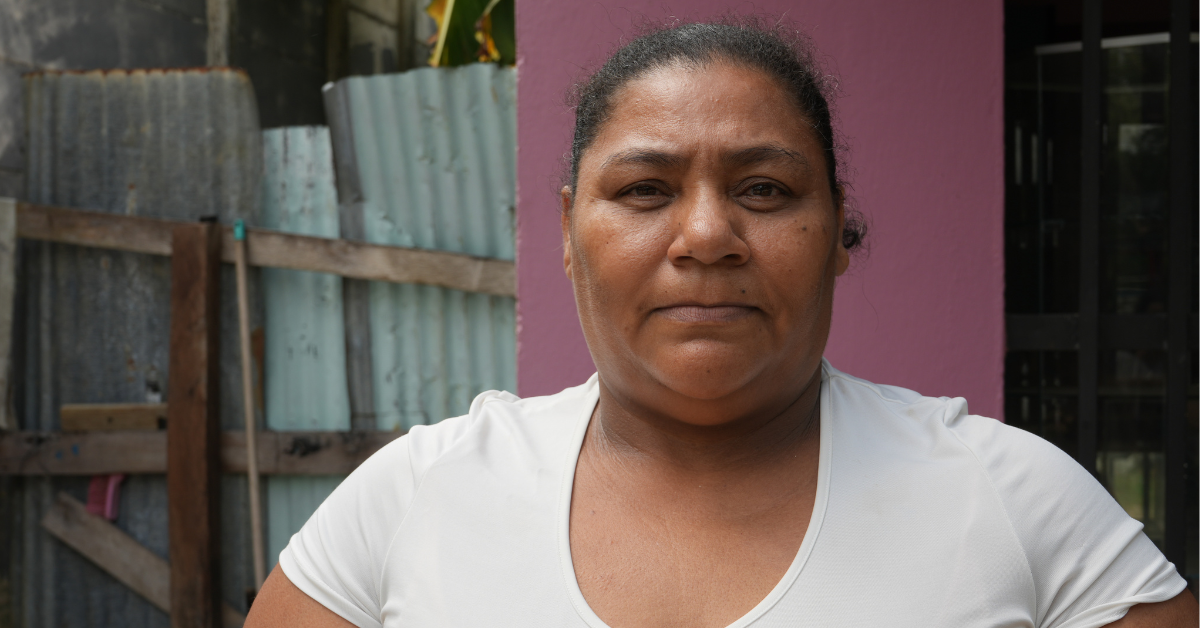
“I thank God for helping me,” Venezuelan woman says after receiving financial support
“When I first arrived, every day was a struggle just to survive,” says Yacenys Andrea Mendoza who fled from her home country – Venezuela.
For Yacenys, those first days in Colombia were defined by uncertainty. “I had no steady income, and I didn’t know how I would pay rent or feed my family,” she said.
She has lived in Colombia for six years, but the early challenges were relentless. To make ends meet, Yacenys worked as a recycler, collecting discarded materials to sell. It was a hard environment. Some people would start conflicts with recyclers, and I even got a bacterial infection,” she says. When she got sick, she couldn’t work, and she struggled to feed her family.
Nearly 8.4 million Venezuelans have fled their country in recent years, seeking safety and opportunity amid economic collapse and violence.
Many arrive in neighbouring countries like Colombia, struggling to access necessities such as employment, health care and education, while also facing discrimination. Colombia continues to experience violence from armed groups and guerrilla factions, while thousands of families are forced to flee their homes within the country due to threats, attacks or insecurity. Combined with high rates of gender-based violence, these conditions make it extremely difficult for both locals and refugees to rebuild their lives.
But Yacenys’s life began to change when she heard about a program that provides women who are displaced or affected by violence with safe spaces, emotional support and cash assistance.
The initiative is part of a $6.2 million program, supported by the Government of Canada and Canadian Lutherans, helping nearly 50,000 people, especially women and girls, in Colombia and Haiti. It is jointly implemented by Canadian Lutheran World Relief and the Lutheran World Federation.
Under the program, cash assistance is provided to survivors of gender-based violence and vulnerable women and girls to help prevent harmful coping strategies such as transactional sex or forced marriage. In Colombia, 790 individuals will be supported.
Yacenys was one of the women selected. When she learned she would receive cash, she cried with happiness. “[I] thank God for helping me,” she said, pausing to collect herself, the weight of what she had been through still close to the surface.She added a message for those supporting the program: “Keep doing this, because this is how some people finally have the chance to know what happiness feels like.”
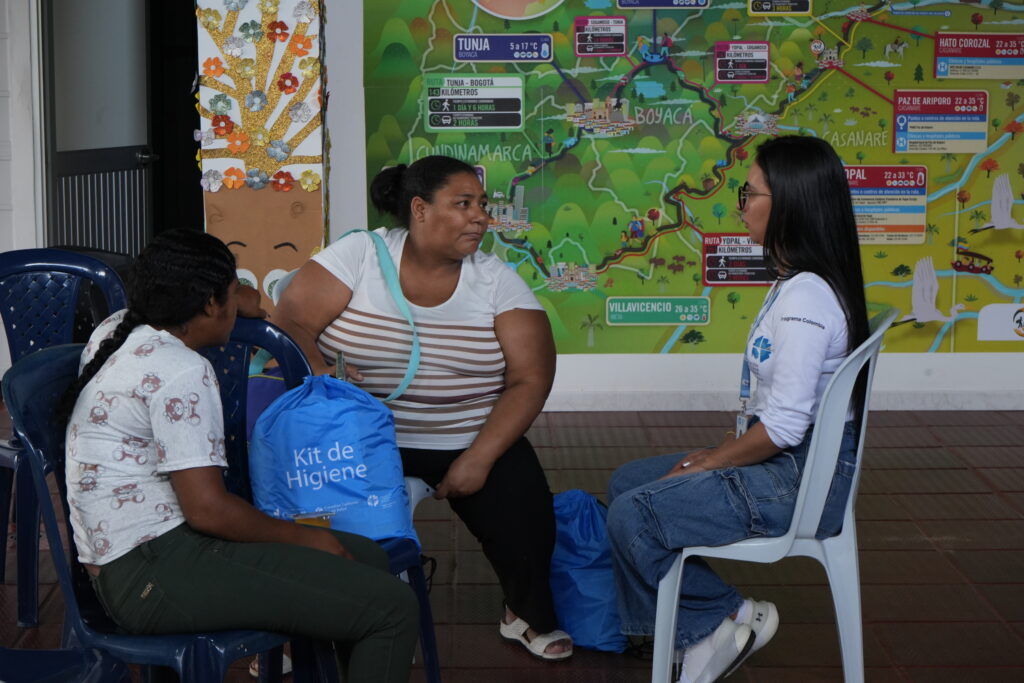
Yacenys Andrea Mendoza connects with LWF staff and other women, receiving emotional support and hygiene kits, which include shampoo, soap and menstrual products. (CLWR photo/Shauna Turnley)
With three cash instalments totalling 600,000 pesos — roughly C$225 — Yacenys started a small empanada business, purchasing ingredients and a food heater. This created a source of income that now gives her stability and independence.
“Without this support, I’d probably still be recycling,” she reflects.
In addition to financial support, Yacenys also visits a safe space where she receives emotional and psychosocial support. These sessions have helped her build confidence, cope with discrimination and form supportive relationships with other women in her community.
“These sessions made me feel like an empowered woman. I’ve learned to take care of myself and my emotions,” she says.
Top image caption: Having fled Venezuela, Yacenys Andrea Mendoza finds support and community at a women’s safe space in Colombia as she works to create a better future. (CLWR photo/Shauna Turnley)