Sudan refugee crisis: how Canada is helping families rebuild in Chad
Imagine leaving your home with nothing but the clothes you are wearing.
Imagine walking for days to escape violence — arriving somewhere safer only to find no running water, no school, no market and little protection from the scorching desert heat.
For hundreds of thousands of people displaced by the conflict in Sudan, this is not an exercise in imagination. It is daily life.
A teenager walks up to a group of CLWR and LWF staff visiting a refugee camp extension in eastern Chad.
“We don’t have water. We need water, we’re thirsty.” he says.
There is no panic in his voice. No urgency. Just a statement of fact.
For Tyler Braun, CLWR’s director of humanitarian programs, who was visiting the site near the border with Sudan, what stood out was not the request itself but its normality.
“It was such a normal conversation in such an abnormal situation,” Tyler Braun said, “almost like asking for a chocolate bar.”
This is the reality inside the world’s largest displacement crisis.
Since civil war erupted in Sudan in April 2023 between the Sudanese Armed Forces and the Rapid Support Forces, more than 14 million people have been forced from their homes. Many have crossed borders into neighbouring countries including Chad and South Sudan, arriving in communities already struggling to access basic needs.
With support from the Government of Canada, CLWR/LWF, CARE Canada and Oxfam Canada are launching a coordinated regional response. Over the next two years, the consortium will reach more than 429,000 people across Sudan, South Sudan and Chad with life-saving support including clean water, sanitation services and programs that prevent gender-based violence and support survivors.
A crisis measured in people, not numbers
CLWR, through the Lutheran World Federation (LWF), is leading implementation in Chad, reaching more than 78,000 people.
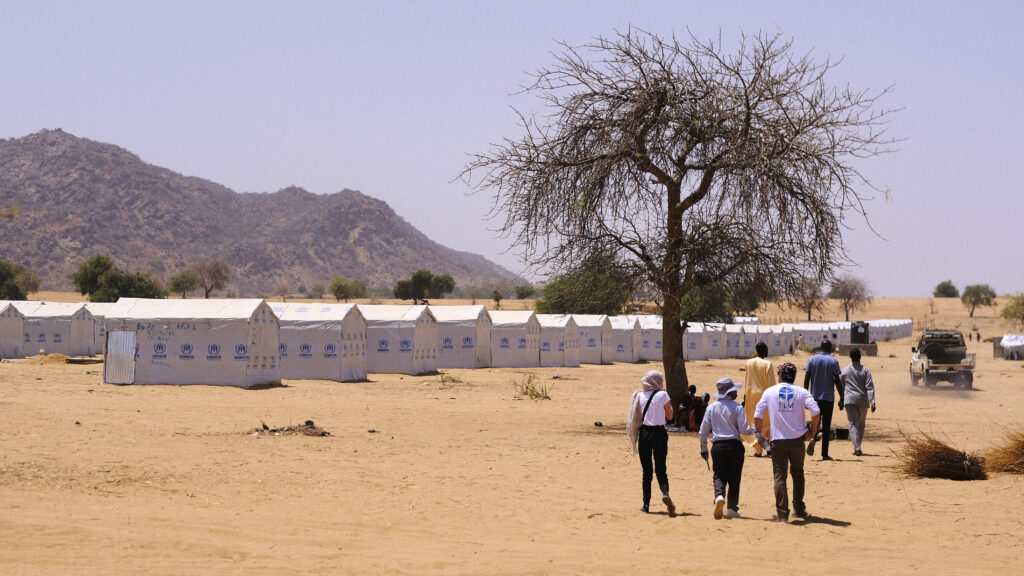
When Tyler visited the region in May 2026, one of the places he visited was the extension area of Arkoum refugee camp where families fleeing Sudan are now living in makeshift conditions in the desert, with limited access to essential services.
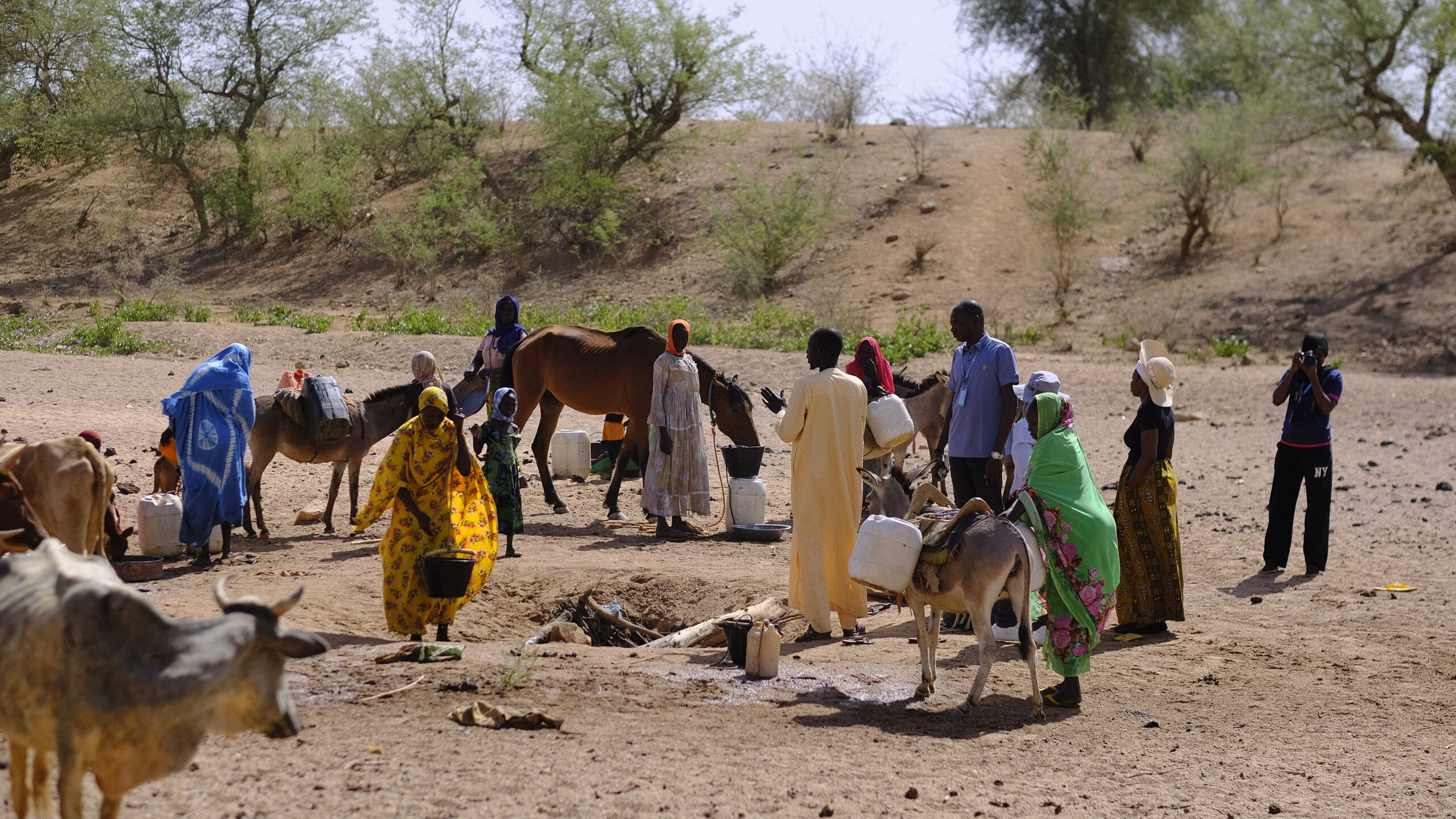
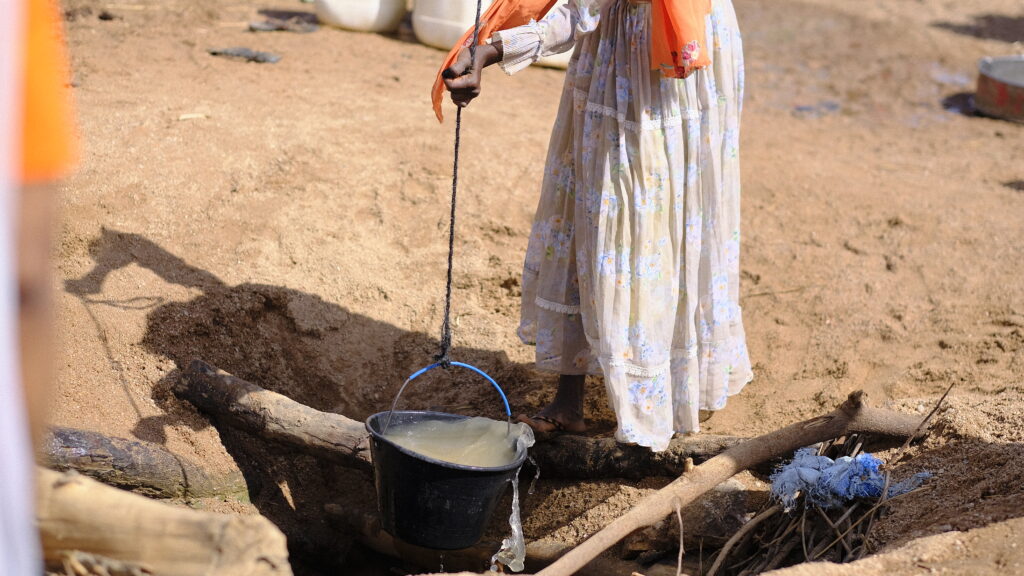
In parts of the camp, access to water remains critically limited. The World Health Organization recommends a minimum of 15 litres of water per person per day. Here, families are surviving on as little as six litres. The nearest permanent water source is nearly an hour’s walk away in temperatures that regularly exceed 40°C.
Only one NGO is currently providing water in the extension area. A single water truck makes repeated daily trips, refilling and returning to distribute limited supplies that are quickly depleted.
“People know what they need,” Tyler said. “They know what they want. Right now, there just isn’t enough support.”
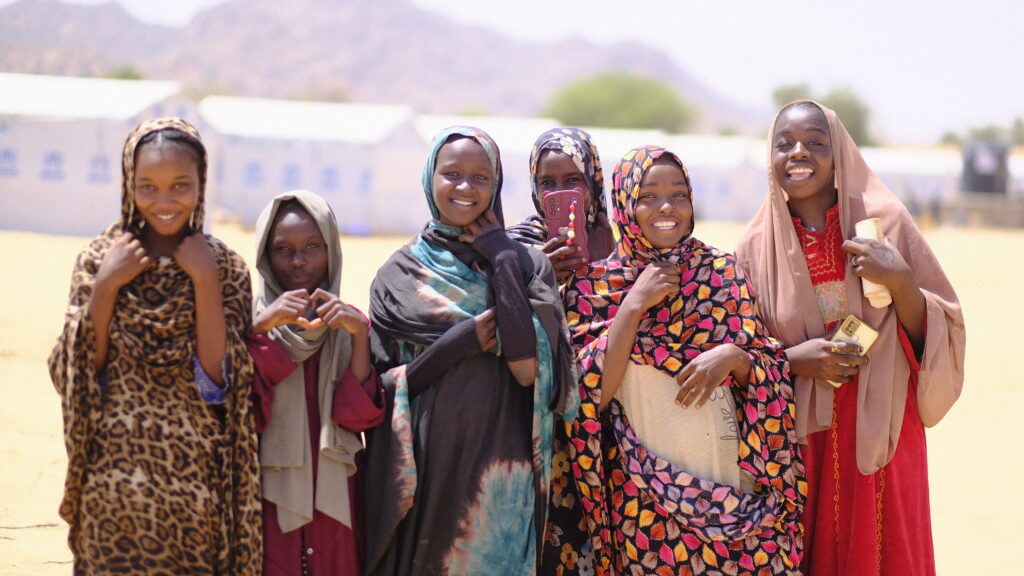
The extension area continues to receive newly arrived refugees fleeing Sudan’s war. Rows of temporary shelters stretch across the desert — tarpaulin structures built for short-term use but often these becomes long-term homes. Makeshift latrines offer limited privacy and safety.
Families gather under sparse trees for shade from the extreme heat. Many arrive with almost nothing.
“People are fleeing conflict, they’re fleeing war,” Tyler said. “They have nothing — no supplies, nothing to cook with, nothing to clean with. Sometimes they arrive with just the clothes they are wearing.”
He added: “There are no other options in this context. Literally nothing else.”
Unimaginable violence against civilians
For many refugees, particularly women and girls, the dangers did not end when they crossed the border.
“Sexual violence has been used as a weapon of war,” Tyler said. “People are fleeing it but they’re not necessarily out of danger.”
Humanitarian organizations report widespread gender-based violence throughout the conflict driven by insecurity, lack of resources and the collapse of systems in place to protect women and girls.
Staff have heard reports of severe intimidation and violence used to prevent survivors from reporting abuse, including being tied to trees.
“It’s horrifying,” Tyler said, adding that violence often emerges in conditions of “extreme stress, lack of money, lack options, lack of hope.”
Meeting urgent needs
In Chad, CLWR and LWF will focus on refugee camps and host communities in Ouaddaï and Sila provinces areas under growing pressure as people continue to arrive from Sudan.
The response includes:
- Expanding safe water access through 58 water systems including: boreholes, water points, pipelines and water treatment to provide safe drinking water.
- Improving sanitation by building or rehabilitating 245 latrines.
- Providing hygiene support to 1,600 women and girls, plus 196 handwashing stations in key community spaces.
- Supporting women and girls through building six safe spaces. Around 400 women and girls who experienced gender-based violence will receive direct one-to-one support, which is crucial in a context where you can’t just call 911, and social stigma can prevent women from getting help from friends or family. Survivors receive immediate support as well as, information about and referrals to local services, including medical care, legal support, counselling and livelihoods opportunities.
- The safe spaces will also offer group programming focused on skills building, psychosocial support and peer connection.
The work is part of a broader regional approach with Oxfam Canada and CARE Canada that recognizes that displacement does not stop at national borders. The coordination across Sudan, Chad and South Sudan will ensure continuity of support for displaced communities.
The difference support can make
Tyler Braun has worked in humanitarian responses around the world including Haiti and Somalia. What stands out most to him in Chad he said is the absence of alternatives.
“There is nothing else,” he said. “If services aren’t brought to people in these camps they have nothing.”
That is why Canada’s support matters.
In practical terms it means more families with access to clean water. Women and girls with safer spaces and support to protect them from violence. Survivors with pathways to care. Communities with the basic foundations of dignity.
But beyond the numbers it is about something more fundamental.
“The Sudan crisis can feel very big and very far away,” Tyler said. “But when you’re there you are reminded these are individual people who had homes communities and ordinary lives. Now they’re facing enormous challenges and they need support.”
For families rebuilding their lives in refugee camps across eastern Chad that support can mean the difference between survival and the possibility of a future.
“For me it’s black and white. There’s nothing else for people there — nothing,” Tyler said. “It’s our duty to do something.”
Top image caption: On the road from Farchana to Hadjer Hadid in Eastern Chad, community members gather near a hand-dug well in a seasonal wadi. During the dry season, people often dig into the sandy riverbed to access water for themselves and their livestock, highlighting the pressure on water resources in the region. (LWF photo/Marie Renaux)