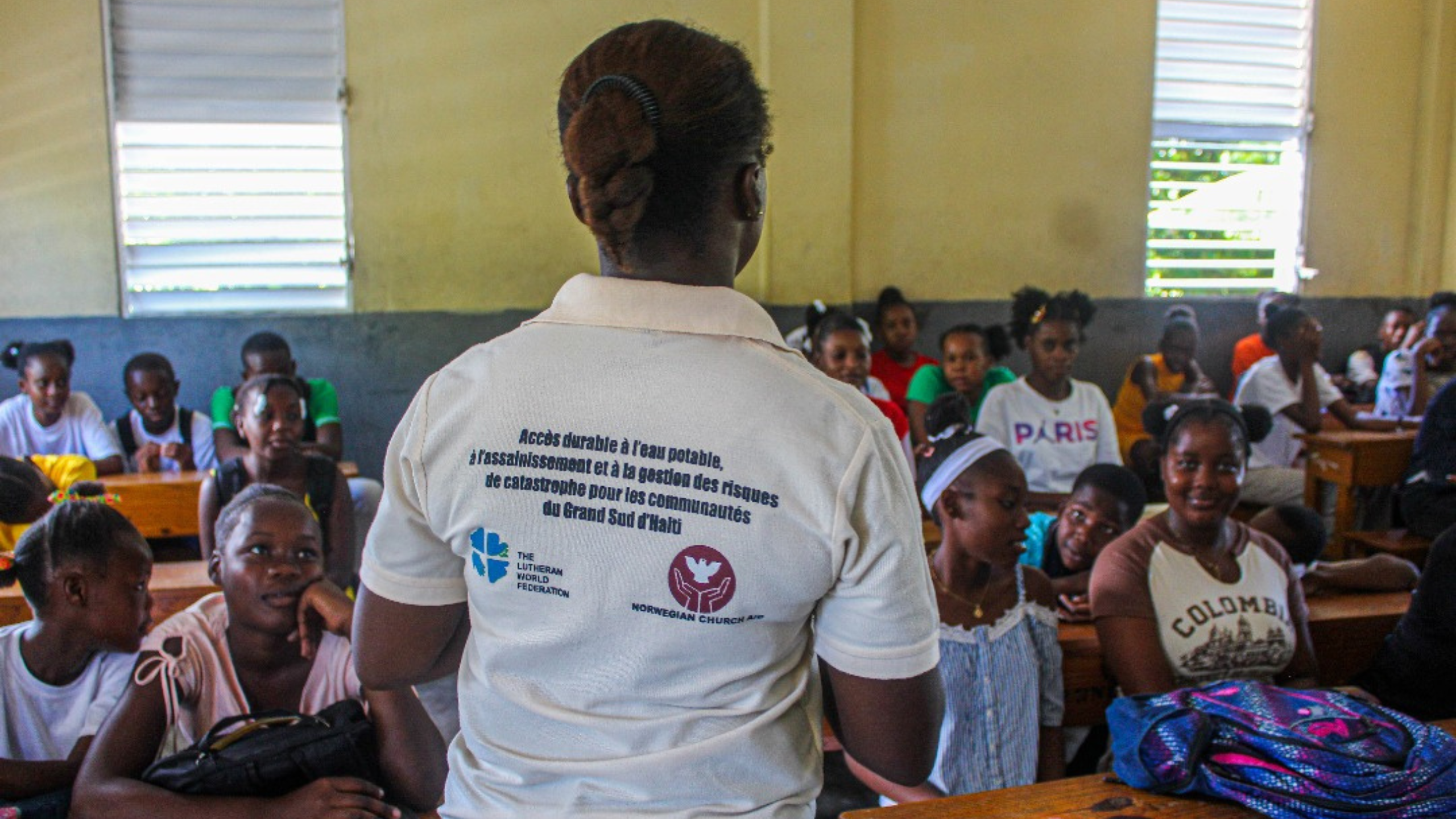
Women rebuilding their lives in Haiti
Ongoing gang violence and political instability in Haiti have forced hundreds of thousands of people from their homes. Women and girls face a higher risk of abuse, while many families live without income, clean water or safe shelter.
With support from the Government of Canada and the generosity of Canadian Lutherans, women and girls across Haiti are getting the support they need to help them stay safe, earn an income and provide for their children.
This work is part of a multi-year initiative implemented by Canadian Lutheran World Relief in partnership with the Lutheran World Federation and local organizations.
Women and girls who face great risk of gender-based violence, can access safe spaces, counselling, medical care and legal support. The project also improves access to clean drinking water and hygiene supplies, which are often difficult to access or too expensive.
Cash assistance is also a key part of the response with 744 families — 4,464 people — receiving US$480 over four months. The support helps women meet basic needs and avoid harmful strategies to provide for their families, such as transactional sex or forced marriage. The program prioritizes women who have disabilities or chronic illnesses, families led by women or children and people who have experienced gender-based violence.
These are just a few of their stories.
Alexandra Charles: Resilience and hope
Alexandra Charles is a mother of two from Port-au-Prince. Before violence forced her to flee, she ran a small beauty business in her community.
Armed gangs now control most of Port-au-Prince—up to 80 to 85% of the city, according to the Council on Foreign Relations—making daily life dangerous for families.
Alexandra was caught in that violence. She was hit by a projectile in her right hip while buying supplies for her business. The injury left her disabled, and she has undergone four surgeries to try to regain use of her leg.
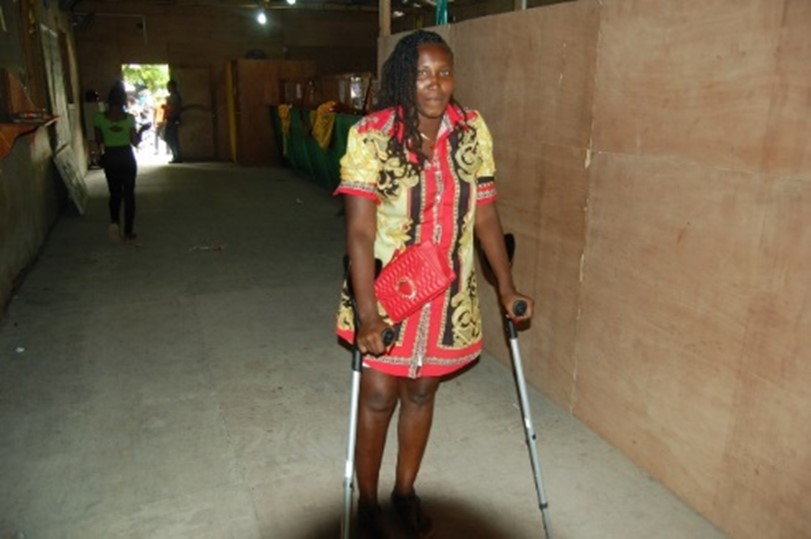
(LWF photo/ Rodney Toussaint)
In August 2024, fearing for their safety, Alexandra, her husband and their two children left everything behind. They relocated several hours from Port-au-Prince to Camp-Perrin, in southern Haiti.
With support from the project, Alexandra began to rebuild. The first cash payment helped cover hospital care and school fees for her children. With the second, she bought a pig to help generate income.
Despite everything she has faced, Alexandra is focused on the future.
“Since I have difficulty getting around, I want to start a business from home,” she says.
Dol Estilla: “I feel I am coming back to life”
Dol Estilla, a mother of six, lives in Haute Voldrogue, a rural area in southwestern Haiti. For years, home has not been a place of safety or dignity.
Across Haiti, one in four women aged 15 to 49 has experienced intimate partner violence. Many cases go unreported because of fear, stigma and lack of support.
Dol has lived that reality.
“At night, I slept on the floor,” she says. “My husband didn’t want to buy a bed.”
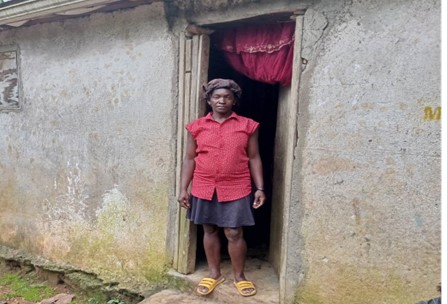
(LWF photo/Glézil Jocelyn)
She faced ongoing emotional abuse. Her husband refused to support her first four children and became angry when she tried to provide for them.
“I felt that my life was impossible,” she says.
Things began to change when she received financial support through the project. With the first payments, she hired a carpenter to build a bed and paid her children’s school fees. She is now starting a small business, so she does not have to depend entirely on her husband.
Though she still faces challenges in her relationship, the financial support has made a meaningful difference.
“This support saved my life,” Dol says. “I feel I am coming back to life.”
Gustin Marie Claine: Reclaiming control
Gustin Marie Claine is a mother of four living in Grand Vincent, an isolated farming community in southwestern Haiti. For years, she worked alongside her husband on their family farm but had no control over the crops or income.
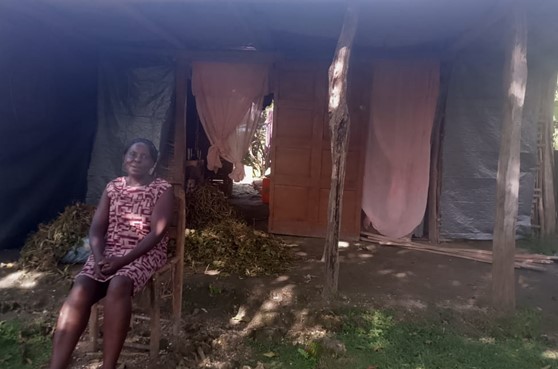
(LWF photo/Glézil Jocelyn)
Across Haiti, women make up an estimated 70% of the rural agricultural workforce, yet men control most land and earnings. Many women cannot access money for food, school fees or health care for their children.
Gustin lived that reality. Her husband controlled the crops, sales and income. When she spoke up, she faced domestic violence. For years, she could not access money to care for her children, and basic needs such as food and school fees were often unmet.
With support from the project, Gustin has begun to take control of her family’s livelihood. She has paid her children’s school fees, bought shoes for them and invested in a goat to strengthen the family’s income and food security.
“It will help me meet my children’s needs in the days to come,” she says.
For Gustin, each payment represents a chance to provide for her children and build a more secure future. While cash support does not solve the challenges she faces at home, it has given her the resources and dignity to care for her family.
Top photo caption: Facilitator, Keteline Bien Aimee ,who works with local partner AHAAMES leads an awareness session on gender-based violence at the National Congregational School in Torbeck, Haiti. (LWF photo/Ronaldo Gerome)